
A Detailed Hair Transplant Overview
Hair is more than just a physical feature; it often symbolizes health, youth, and vitality, deeply connected to personal identity and self-esteem. The way we groom and style our hair reflects its importance in expressing our personality and boosting our confidence. In a vibrant place like Long Island, a hair transplant can offer more than just a restorative solution—it can be a transformative step in one’s life journey.
Many people struggle with hair issues such as thinning, receding hairlines, or baldness. These conditions can result from various factors including genetics, stress, illness, or simply aging. In an ideal world, losing hair wouldn’t make someone look less appealing. But social norms often put too much weight on having a full head of hair as a sign of attractiveness. This attitude can make people who are losing their hair feel less confident and make them shy away from other people.
This is where the benefits of a hair transplant in Long Island come into play. It offers a discreet and effective way to regain not only your hair but also your confidence and sense of self. By addressing hair loss with a professional transplant, individuals can experience a renewed sense of identity and assurance in social interactions.
Before & After Gallery


Disclaimer: Outcome or results shown are not guaranteed and may vary from patient to patient. Cosmetic procedures are associated with possible risks and complications, always have a thorough discussion with your surgeon. Images posted with consent.
Your Hair Loss Solution in Long Island
Hair loss, whether in men or women, can deeply affect self-esteem and social interactions. It’s not just about appearance; it’s about how you feel and how you’re perceived. Fortunately, hair loss doesn’t have to be a permanent issue. Early treatment and medical consultation can lead to effective solutions, with hair transplants often being a top recommendation.
Since their development in the 1950s, hair transplant techniques have evolved dramatically, providing powerful solutions for both men and women. These procedures do more than just stop hair loss—they rejuvenate and enhance hair density and appearance. Today’s hair transplants are a testament to medical advancements, offering a safe and effective remedy for hair loss.
We use a different approach to hair restoration at Nova Medical Hair Transplant in Long Island. We prioritize a boutique-style approach that emphasizes patient comfort and procedure efficacy, in contrast to many other clinics. Our clinic guarantees the highest levels of care and safety by providing a setting similar to a hospital.
We carefully consider which approach is best for each person, striving for positive and life-changing results. The testimonies of our clients attest to the transformative power of our procedures, demonstrating not only the happiness of having hair that looks natural and improves general well being, but also the restoration of self-esteem. If you’re looking for a hair transplant surgery that meets your needs and produces fantastic results, choose Nova Medical.
What is the FUE Method?
FUE, or Follicular Unit Extraction, is a modern hair transplant technique where individual hair follicles are carefully removed from the back of the scalp. This method doesn’t leave a linear scar; instead, it uses a small 1-millimeter punch tool to create tiny micrografts, which heal with nearly invisible scars.
With FUE, you can keep your hair very short in the donor area without showing signs of the procedure. Although the process of extracting each graft takes time and precision, the natural-looking results are worth it.
FUE is ideal for younger individuals, African-Americans, and those with limited donor hair, as it allows for efficient use of the donor area. It’s also a preferred method for transgender men wanting to grow facial hair like beards, mustaches, sideburns, or fuller eyebrows. The precision of FUE ensures natural-looking enhancements tailored to your needs.
What to Expect During Your Hair Transplant Procedure
Embarking on a hair transplant journey can be both exciting and nerve-wracking. At Nova Medical Hair Transplant, we aim to make the process as smooth and comfortable as possible.
Understanding what to expect during your procedure can help alleviate any concerns and prepare you for the experience. From the initial consultation to the meticulous transplant process and aftercare, we ensure that every step is clearly explained and tailored to meet your specific needs. Here’s a detailed look at what you can expect during your hair transplant with us.
Initial Consultation
Your journey starts with a consultation during which our experts use a customized approach to learn about your particular hair difficulties. They will examine your medical history, including any current medicines, ask about any hair care products you have used, and go over your history of hair restoration.
The next step is a physical examination to understand the pattern of your hair loss. We will assess the texture, thickness, and color of your hair to determine whether or not you are a good candidate for surgery. Your hair transplant will be scheduled if you are eligible.
Preparing for Surgery
On the day of the procedure, you will change into comfortable clothes that the clinic will offer. During the pre-surgery meeting, our technicians will go over the process with you and go over the expectations and aims of the transplant.
Next, with great attention to symmetry, our professionals will design your hairline. This is a thorough process that may entail developing a new hairline to create a natural look. We’ll also take reference photos of your hair for documentation purposes.
The Hair Transplant Procedure
Once the preparation is done, your hair transplant procedure will begin. For FUE, the hair at the back of your head will be trimmed short. If the strip method is used, only the specific area where the strip will be taken will be trimmed.
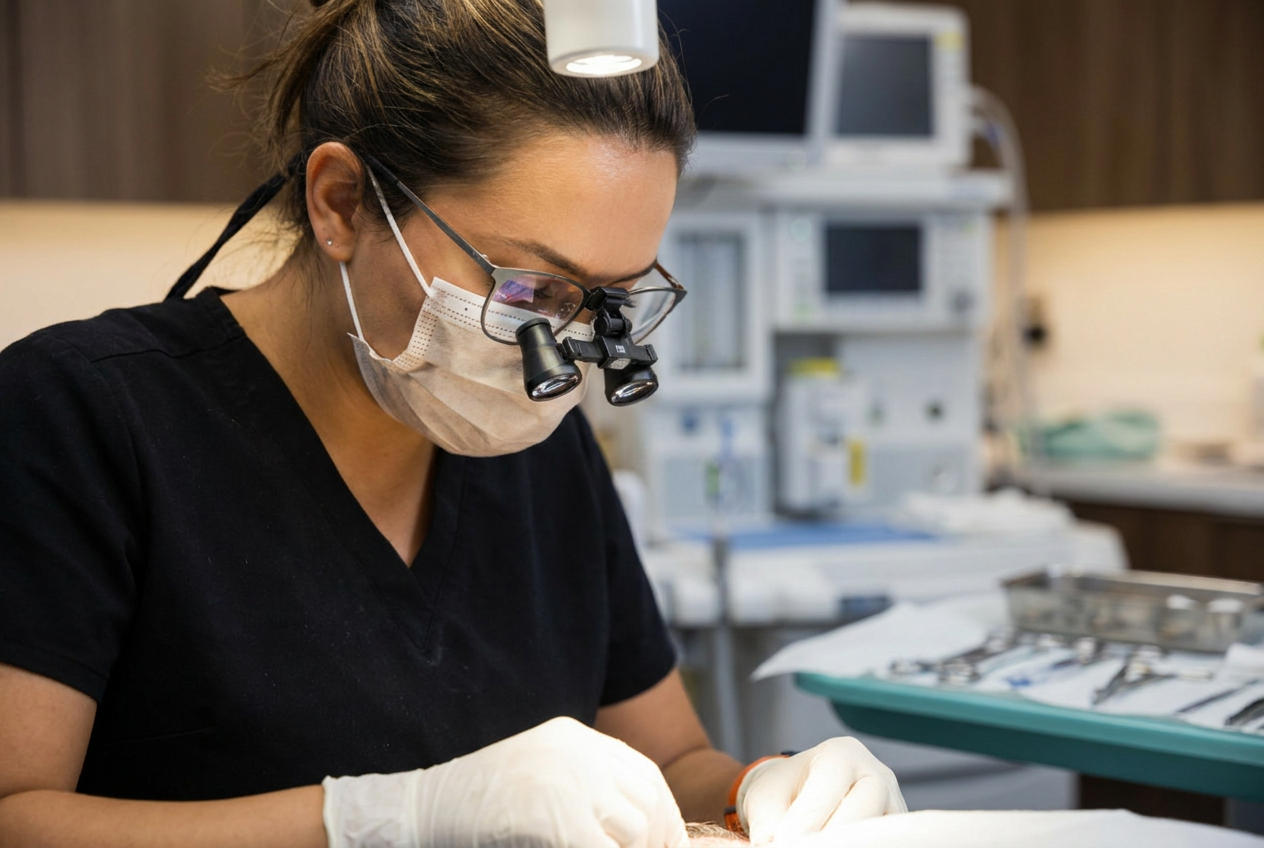
You will then be taken to the surgical room, where a local anesthetic will be applied to numb your scalp. Once the anesthetic takes effect, the surgeon or technician will start collecting grafts. In the FUE process, each hair follicle is carefully removed one by one using a high-powered magnifying tool. With the strip method, a section of the scalp with hair is removed and then stitched up to minimize scarring.
During graft harvesting, you will lie face down to give the surgeon the best access to the donor area. To make this part more comfortable, you might want to bring headphones to listen to music or podcasts, or you can use the time to take a relaxing nap.
Graft Preparation and Implantation
Each graft is looked at under a microscope to make sure it is of the highest quality after it has been harvested. The next step is the implantation process which will utilize the “stick and plant” method to put in the grafts. This is done by putting each graft into a receiver site that has already been gently made. This speeds up the process and makes sure that the grafts are placed correctly so that the result looks natural.
During the insertion phase, you will sit in a slightly reclined chair. Once the process is finished, you’ll likely be pleasantly surprised by how easy and painless it was.
Visit our clinic’s reviews and gallery to learn about what other patients have said about their experiences and to read their comments.
The Hair Transplant Recovery Process
Immediate Post-Procedure Care
After a hair transplant at our Long Island clinic, patients can leave without the need for bandages and can immediately enjoy the look of a fuller head of hair.
Postoperative care includes taking antibiotics and medications to minimize swelling, especially during the first three days after the procedure. Mild pain relievers are recommended to ensure comfort while you sleep for the first two nights.
Returning to Daily Activities
Patients typically return to work and everyday activities quickly, experiencing minimal downtime. Gentle hair washing is allowed post-surgery, but more vigorous activities such as swimming, intense workouts, sexual activity and weightlifting should be postponed for about one to two weeks to facilitate proper healing.
Hair Growth Timeline
New hair growth begins to become noticeable around four to six months post-transplant. Many patients accelerate this process by applying Minoxidil, a topical hair growth treatment, each evening. The full results of the hair transplant are usually seen between 12 to 18 months, with the newly transplanted hair expected to grow and last for many years.
Life is not perfect
But your hair can be
Hair Transplant Long Island FAQs
How does a hair transplant actually work?
To put it simply, a hair transplant involves relocating hair follicles from a donor area, usually the back or sides of the scalp, to a thinning or balding area.
The process starts with the extraction of hair follicles using techniques like Follicular Unit Extraction (FUE) or Follicular Unit Transplantation (FUT). These follicles are then carefully implanted into the target area, where they will grow naturally over time, blending seamlessly with existing hair.
How long does a hair transplant procedure take at the clinic?
The duration of a hair transplant procedure can vary depending on the number of grafts needed. Typically, it takes between 4 to 10 hours. Smaller sessions might take around 4 hours, while larger sessions, involving thousands of grafts, can extend up to 10 hours. The procedure is done on an outpatient basis, allowing patients to go home the same day.
What is the recovery process like after a hair transplant?
The recovery process after a hair transplant involves minimal downtime. Patients can usually return to work and normal activities within a few days. Initial swelling and redness in the treated areas are common but subside within a week. Scabs that form around the transplanted follicles will fall off within 10 to 14 days.
Full healing of the donor and recipient areas takes about two weeks, and post-operative care instructions must be followed to ensure optimal healing and hair growth.
What is the overall success rate for hair transplants?
Hair transplant procedures have a high success rate, often exceeding 95%. The success depends on various factors, including the surgeon’s skill, the patient’s overall health, and adherence to post-operative care instructions. Properly performed transplants by an experienced surgeon such as the one at Nova Medical in Long Island result in natural-looking hair that lasts a lifetime.
What is the success rate for hair transplants?
Hair transplants, when performed using advanced techniques by experienced, board-certified surgeons and technicians, generally have a high success rate. Modern procedures can achieve up to a 95% success rate. This reflects the effectiveness of the procedures and the natural-looking quality of the results. Patients can expect significant hair restoration that blends well with their natural hair growth patterns.
When can I expect new hair growth after the transplant?
New hair growth typically begins around 4 to 6 months after the transplant. Initially, the transplanted hair may shed, which is normal. By the 4 to 6-month mark, new growth will start to appear. The full benefits of the transplant are usually visible between 12 to 18 months, with the hair continuing to thicken and blend with natural hair over time.
How many sessions will I need?
Most patients achieve their desired results with a single hair transplant session. However, some may require multiple sessions to achieve optimal density and coverage, especially if the area of hair loss is extensive or if the patient wants a particularly thick result. The number of sessions needed will be determined during the consultation based on individual goals and hair loss patterns.
Are the transplanted hairs permanent after the surgery?
Yes, the transplanted hairs are considered permanent. The hair follicles are taken from areas typically resistant to hair loss (usually the back and sides of the scalp) and retain their resistance when transplanted. These hairs will continue to grow naturally for a lifetime, requiring only regular hair care and maintenance like the rest of your natural hair.
Can I have someone else's hair transplanted to my scalp?
No, hair transplants must use your own hair follicles from your scalp. This is because your body would reject hair follicles from another person, leading to complications and failure of the transplant. The transplanted hair needs to come from your own scalp to ensure compatibility and successful growth.
How many transplanted hairs would survive when I get my full results?
The survival rate of transplanted hairs is generally high, with about 85% to 95% of the transplanted follicles surviving and thriving in their new location. This high survival rate ensures that the majority of the transplanted hair will continue to grow and provide lasting results.
Does the implanted hair look natural after hair transplant surgery?
Yes, when performed by experienced surgeons such as the ones at Nova Medical Hair Transplant, the implanted hair looks natural. Our surgeon meticulously places each graft to mimic natural hair growth patterns, considering factors such as hairline design, density, and the angle of hair growth. This careful attention to detail ensures that the results blend seamlessly with your existing hair and avoid the “pluggy” look.
What causes hair loss in the first place?
Hair loss can be caused by a variety of factors, including genetics, hormonal changes, medical conditions, and stress. Androgenetic alopecia, or genetic hair loss, is the most common cause, affecting both men and women. Other factors like nutritional deficiencies, certain medications, and illnesses can also contribute to hair loss.
Will there be any visible scars on my scalp?
With FUE, scarring is minimal and consists of tiny, dot-like scars that are virtually undetectable once the hair grows back. FUT may leave a thin linear scar at the donor site, but it is usually well-hidden by surrounding hair. Advances in surgical techniques have significantly reduced the visibility of scarring in both methods.
Is a hair transplant worth it after all?
Many patients find hair transplants to be worth it due to the lasting and natural-looking results. Restoring hair can significantly boost self-esteem and confidence, improving overall quality of life. While the initial cost and recovery process might seem daunting, the long-term benefits of a fuller, natural-looking head of hair make it a valuable investment for many.
Does hair transplant surgery hurt?
During the procedure, local anesthesia is used to numb the scalp, ensuring that patients feel no pain. Some discomfort might be experienced during the administration of anesthesia. Post-surgery, mild pain or discomfort is common, but it can be managed with prescribed pain relievers. Most patients find the discomfort to be minimal and temporary.
Can I drive home after my hair transplant?
It is recommended to arrange for transportation home after the procedure. While local anesthesia is used, patients might feel drowsy or uncomfortable post-surgery. Having someone drive you home ensures your safety and allows you to rest and recover immediately after the procedure.
Can I have sex after a hair transplant?
Yes, you can have sex after a hair transplant, but it’s recommended to wait at least 7-10 days post-procedure. This waiting period helps ensure that the grafts settle securely and reduces the risk of dislodging them. Engaging in sexual activity too soon can increase heart rate and blood pressure, which might affect the healing process. Always follow your surgeon’s specific guidelines for the best results.
How soon can I wash my hair after my hair transplant?
You can gently wash your hair a few days after the transplant, following the specific instructions provided by your surgeon. Using a mild shampoo and avoiding vigorous scrubbing is crucial to protect the newly implanted grafts. Proper washing techniques will be detailed by your medical team to ensure optimal healing.
Will others notice I had a hair transplant surgery?
Immediately after the procedure, there might be some visible signs like redness, swelling, and scabs, which can make it apparent that you’ve had a hair transplant. However, these signs typically fade within a week or two. As the new hair grows in, the results will look natural and blend with your existing hair, making it less noticeable. You can also wear a loose hat or head covering to hide any signs if needed.
Can I use Rogaine/Propecia after a hair transplant?
Yes, you can use Rogaine (Minoxidil) or Propecia (Finasteride) after a hair transplant, as recommended by your doctor. These medications can help support hair growth and maintain the health of both transplanted and existing hair. Always follow your surgeon’s advice on when to start or resume these treatments post-surgery.
Do I need to hide my scalp from the sun after a hair transplant?
Avoid direct sun exposure for the first few weeks after your transplant. The scalp is in a delicate healing phase, and sunlight can cause damage or hinder the recovery process. Protect your scalp with a loose hat or sunscreen as advised by your surgeon to ensure proper healing and optimal results.