Hair Transplant Clinic Long Island
A Detailed Hair Transplant Overview
Hair is more than just a physical feature; it often symbolizes health, youth, and vitality, deeply connected to personal identity and self-esteem. The way we groom and style our hair reflects its importance in expressing our personality and boosting our confidence. In a vibrant place like Long Island, a hair transplant can offer more than just a restorative solution - it can be a transformative step in one’s life journey.
Many people struggle with hair issues such as thinning, receding hairlines, or baldness. These conditions can result from various factors including genetics, stress, illness, or simply aging. In an ideal world, losing hair wouldn’t make someone look less appealing. But social norms often put too much weight on having a full head of hair as a sign of attractiveness. This attitude can make people who are losing their hair feel less confident and make them shy away from other people.
This is where the benefits of a hair transplant in Long Island come into play. It offers a discreet and effective way to regain not only your hair but also your confidence and sense of self. By addressing hair loss with a professional transplant, individuals can experience a renewed sense of identity and assurance in social interactions.
Your Hair Loss Solution in Long Island
Hair loss, whether in men or women, can deeply affect self-esteem and social interactions. It’s not just about appearance; it’s about how you feel and how you’re perceived. Fortunately, hair loss doesn’t have to be a permanent issue. Early treatment and medical consultation can lead to effective solutions, with hair transplants often being a top recommendation.
Since their development in the 1950s, hair transplant techniques have evolved dramatically, providing powerful solutions for both men and women. These procedures do more than just stop hair loss - they rejuvenate and enhance hair density and appearance. Today’s hair transplants are a testament to medical advancements, offering a safe and effective remedy for hair loss.
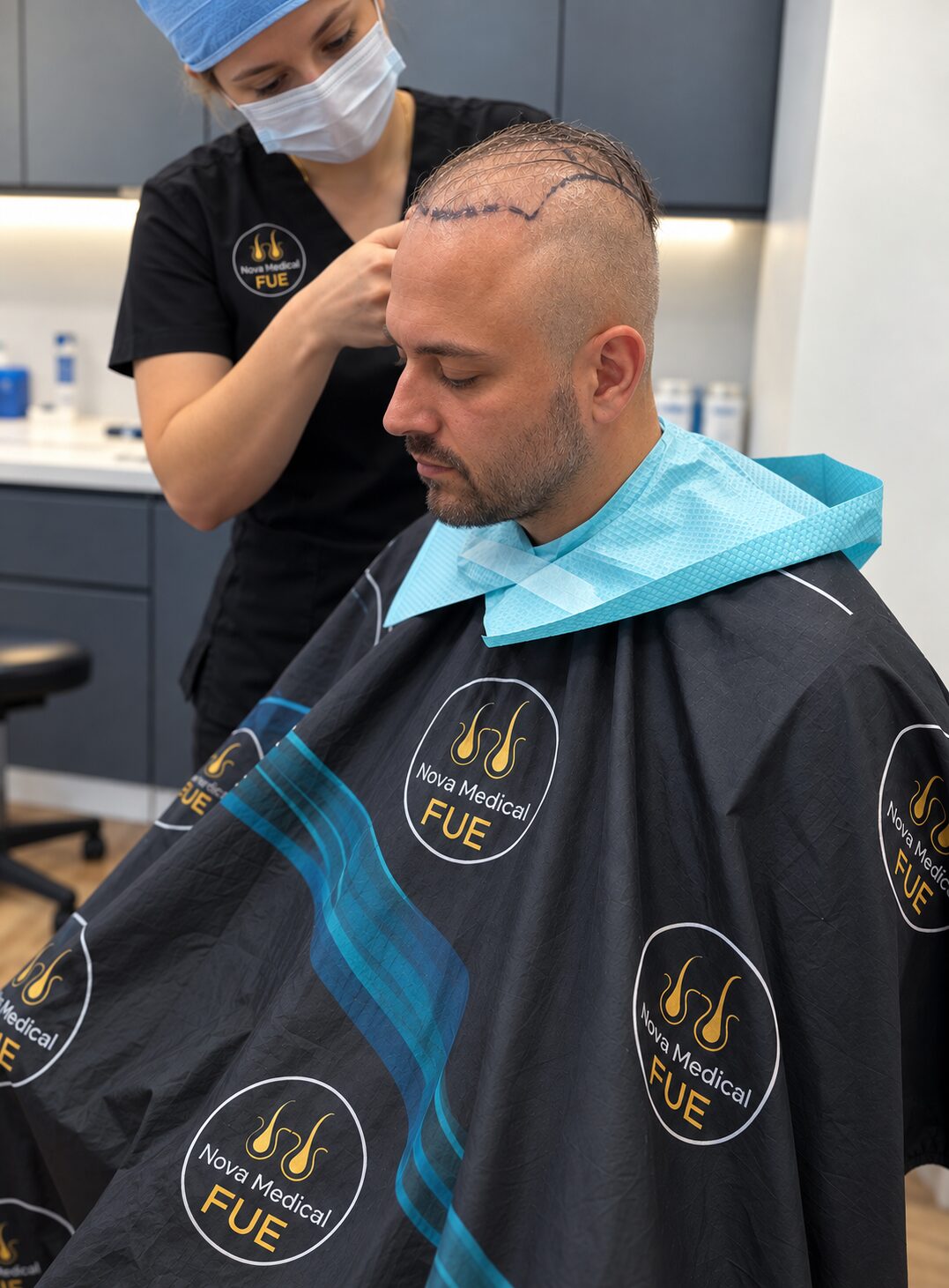
We use a different approach to hair restoration at our hair transplant clinic in Long Island. We prioritize a boutique-style approach that emphasizes patient comfort and procedure efficacy, in contrast to many other clinics. Our clinic guarantees the highest levels of care and safety by providing a setting similar to a hospital.
We carefully consider which approach is best for each person, striving for positive and life-changing results. The testimonies of our clients attest to the transformative power of our procedures, demonstrating not only the happiness of having hair that looks natural and improves general well being, but also the restoration of self-esteem. If you’re looking for a hair transplant surgery that meets your needs and produces fantastic results, choose Nova Medical.
Every Plan Starts With Your Hair
How texture, density and pattern of loss guide each Long Island hair transplant
A transplant only looks convincing when it is planned for the hair you actually have. Straight, wavy, curly and coily hair grow at different angles, catch the light differently and cover more or less scalp per strand, so graft numbers, placement and even extraction technique all shift with your texture. At our hair transplant clinic in Long Island, that assessment comes first, before any graft count is discussed.
Why Texture Matters
Curly and coily follicles often bend under the skin, so they are extracted along their curve to keep each graft whole. Fine, straight hair poses the opposite challenge: each strand hides less scalp, which usually means more grafts set a little closer together to reach the same fullness.
Patients visit our Melville clinic from across Nassau and Suffolk with every kind of hair, and the team tunes the punch it uses, how each graft is handled and the angle it goes in at to suit each one. Those small adjustments are what make transplanted hair sit naturally among your own.
Fitting the Plan to Your Pattern of Loss
Texture is one half of the picture; where you are losing hair is the other. Recession at the front is rebuilt with a gentle, irregular leading edge; thinning across the top is filled with evenly spread density so no area stands out. The crown, the temples and individual bald spots each get a plan of their own.
Some patients have traction alopecia after years of tight braids, weaves or ponytails. Those cases call for an especially gentle approach during extraction and placement, along with practical styling advice afterward, so the restored hair lasts.
What a Personal Plan Delivers
Built this way, the finished result simply looks like your hair, not like work that was done on it. Every Long Island case is held to that standard from the first consultation to the final follow-up.
Benefits of a Hair Transplant on Long Island
For Long Islanders facing hair loss, a transplant is different from anything that only covers the problem. Wigs, hairpieces and concealing fibers hide thinning for a day, while a transplant moves your own living follicles to the thin or bald spots, and they carry on growing there. Because the hair is yours, it looks and behaves exactly like the hair around it.
Upkeep is simple. Once the hair grows in you cut, wash and style it the same way as everything else on your head, with no glue, special products or upkeep appointments, which suits a busy schedule whether you commute into the city or work closer to home.
Each procedure is designed around the way you are losing hair. Whether the problem is at the front, the crown, the temples or in scattered patches, treatment is shaped to your face and your age instead of a stock template.
Transplanted follicles keep their resistance to the hormone behind pattern baldness, so the hair they produce is permanent. Over time that often makes a transplant better value than paying again and again for temporary fixes.
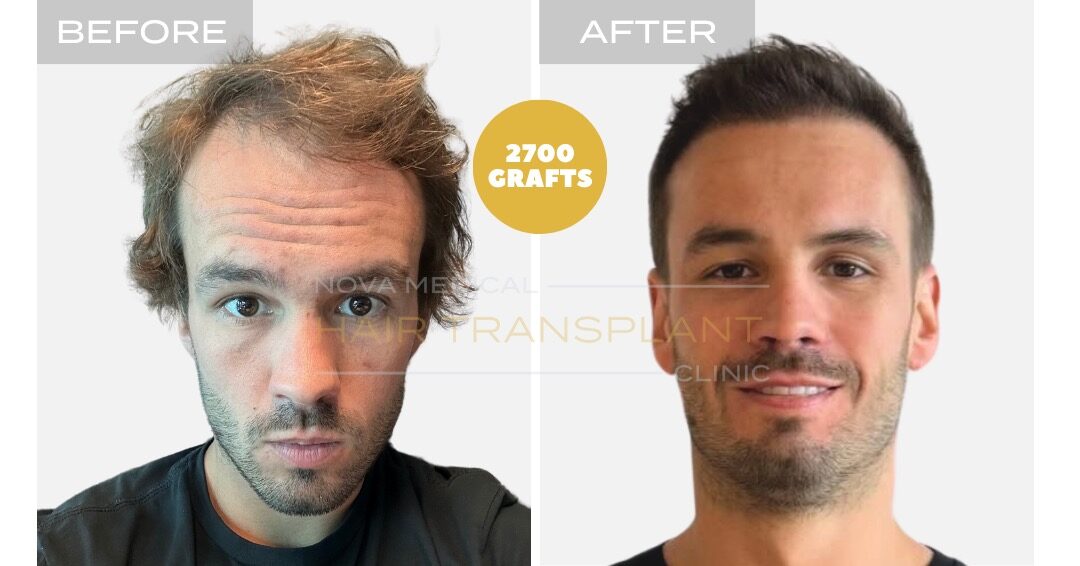
The procedure is minimally invasive and recovery tends to be faster than people expect. Most patients return to work within a few days with only brief, mild discomfort, which is a big part of why so many people on Long Island choose a transplant to restore their hair and their confidence.
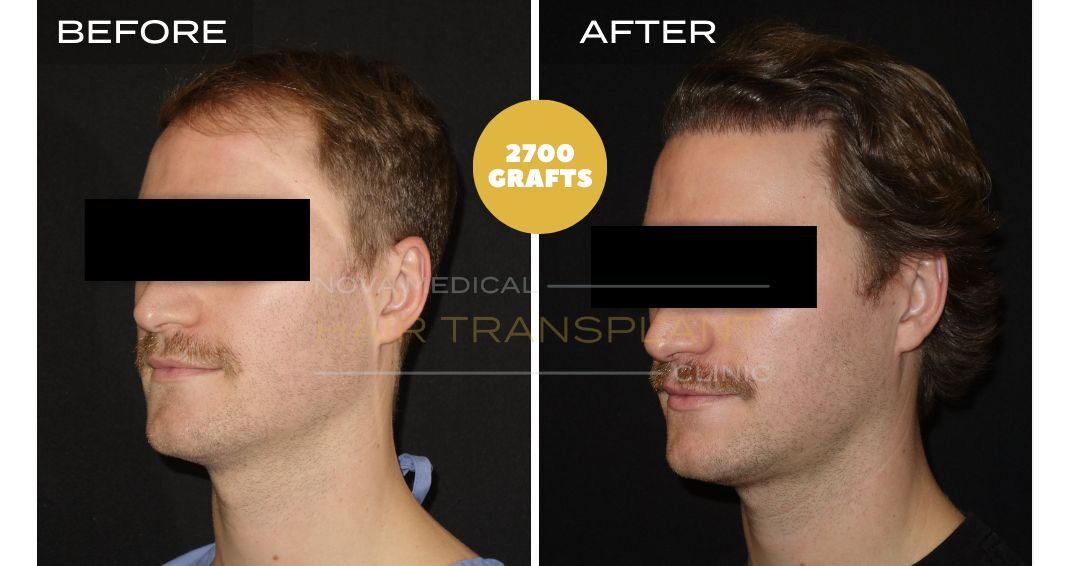
Before & After Gallery
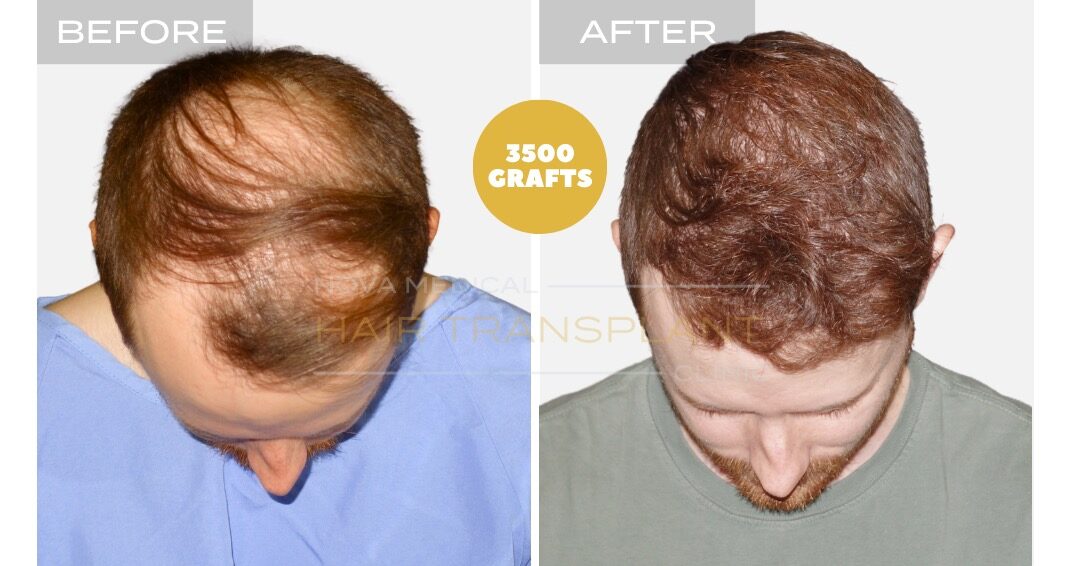
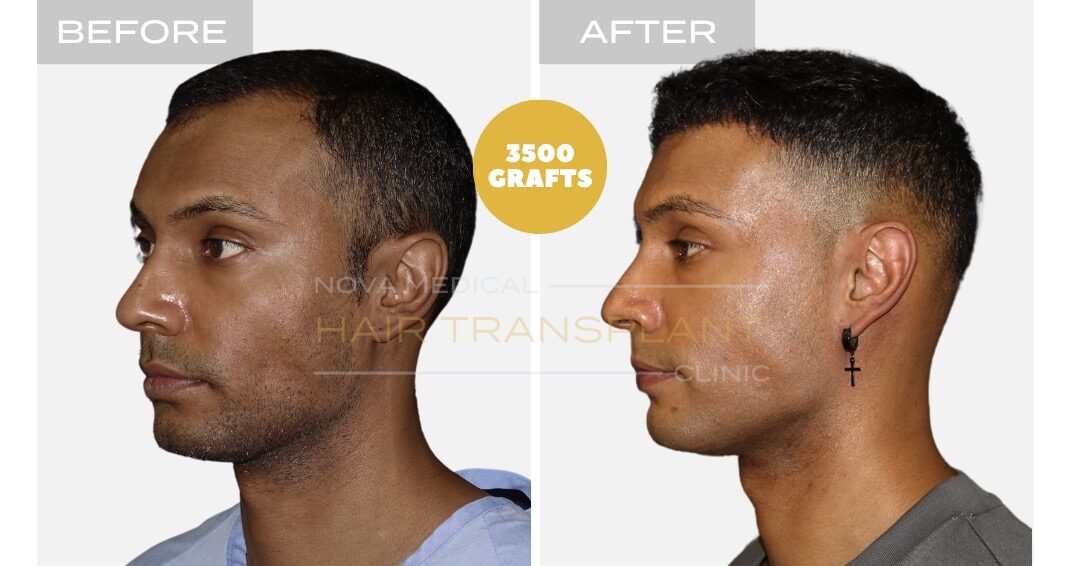
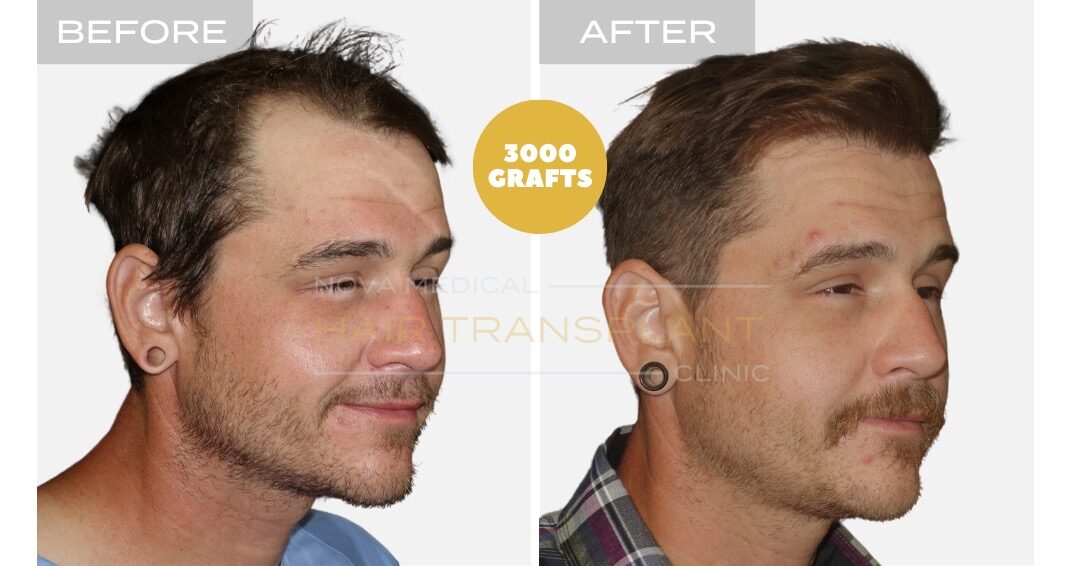
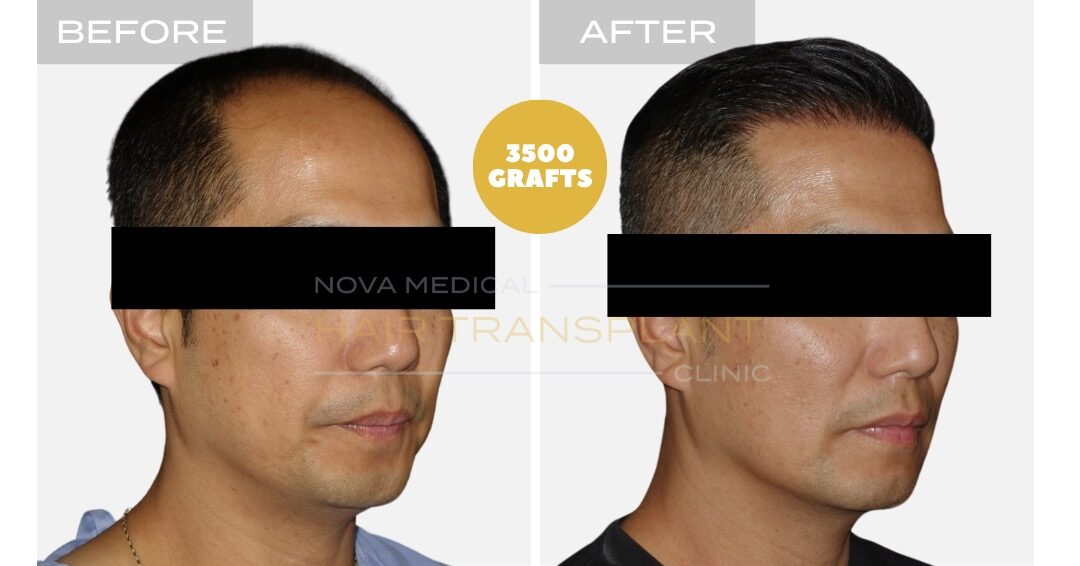
What is DHI?
Direct Hair Implantation (DHI) is one of the newer refinements in hair restoration.
It relies on a pen-like DHI implanter that loads each follicle and places it directly into the scalp. Because the tool controls the depth, angle and direction of every graft, the team has fine control over how natural the finished result looks.
DHI is minimally invasive. Grafts go in without recipient sites being cut in advance, which means less trauma to the scalp, quicker healing and less time for each follicle outside the body, all of which supports graft survival.
Like any technique, DHI is only as good as the team using it. At Nova Medical Hair Transplant on Long Island, years of focused hair restoration experience guide how the implanter is used, so patients get both modern tools and practiced hands.
How DHI Works on Long Island
On Long Island, DHI begins at your consultation, where the team maps out your goals for hairline shape and density and builds a plan around them.
On procedure day the scalp is prepared and numbed with local anesthetic. Follicles are then extracted and loaded straight into the DHI implanter pen, which places them in the target area with careful control over the final look.
Aftercare instructions and scheduled follow-ups support healing. Growth tends to show within a few months, and the full result, a naturally fuller hairline, develops over roughly a year.
DHI vs. FUE
DHI (Direct Hair Implantation) and FUE (Follicular Unit Extraction) are both well-established options at our Long Island clinic, and each suits different patients.
FUE removes and implants follicles one by one, leaving only tiny dot scars and allowing a quick recovery. It is versatile and dependable, which is why it remains the most widely used technique for patients who want effective, discreet results.
DHI builds on FUE by skipping the step of pre-cutting recipient sites. The implanter places each graft directly, giving very precise control over angle and density. It is usually a slower procedure and demands more skill, but for some patients the extra precision is worth it.
At Nova Medical Hair Transplant on Long Island, we recommend whichever technique, or combination, best fits your donor hair, your goals and your timeline, guided by experience and a solid understanding of how hair grows.
What is FUE?
FUE, or Follicular Unit Extraction, is a modern hair transplant technique where individual hair follicles are carefully removed from the back of the scalp. This method doesn’t leave a linear scar; instead, it uses a small 1-millimeter punch tool to create tiny micrografts, which heal with nearly invisible scars.
With FUE, you can keep your hair very short in the donor area without showing signs of the procedure. Although the process of extracting each graft takes time and precision, the natural-looking results are worth it.
FUE is ideal for younger individuals, African-Americans, and those with limited donor hair, as it allows for efficient use of the donor area. It’s also a preferred method for transgender men wanting to grow facial hair like beards, mustaches, sideburns, or fuller eyebrows. The precision of FUE ensures natural-looking enhancements tailored to your needs.
What is FUT?
FUT (Follicular Unit Transplantation) removes a narrow strip of hair-bearing skin from the donor area, usually at the back of the head, and closes the site carefully so it heals as a fine line. The strip is then divided under magnification into follicular units of 1 to 4 hairs each, ready for implantation.
Grafts are placed to follow your natural growth pattern, and a new hairline is designed with your age and facial features in mind so it looks right now and in the years ahead.
Want to compare the two techniques in more detail?
restored
Results that grow in naturally and stay with you.
Request a Free Consultation
No obligation • Same-week availability
What to Expect During Your Hair Transplant Procedure
~2 minutes readEmbarking on a hair transplant journey can be both exciting and nerve-wracking. At Nova Medical Hair Transplant, we aim to make the process as smooth and comfortable as possible.
Understanding what to expect during your procedure can help alleviate any concerns and prepare you for the experience. From the initial consultation to the meticulous transplant process and aftercare, we ensure that every step is clearly explained and tailored to meet your specific needs. Here’s a detailed look at what you can expect during your hair transplant with us.
Initial Consultation
Your journey starts with a consultation during which our experts use a customized approach to learn about your particular hair difficulties. They will examine your medical history, including any current medicines, ask about any hair care products you have used, and go over your history of hair restoration.
The next step is a physical examination to understand the pattern of your hair loss. We will assess the texture, thickness, and color of your hair to determine whether or not you are a good candidate for surgery. Your hair transplant will be scheduled if you are eligible.
Preparing for Surgery
On the day of the procedure, you will change into comfortable clothes that the clinic will offer. During the pre-surgery meeting, our technicians will go over the process with you and go over the expectations and aims of the transplant.
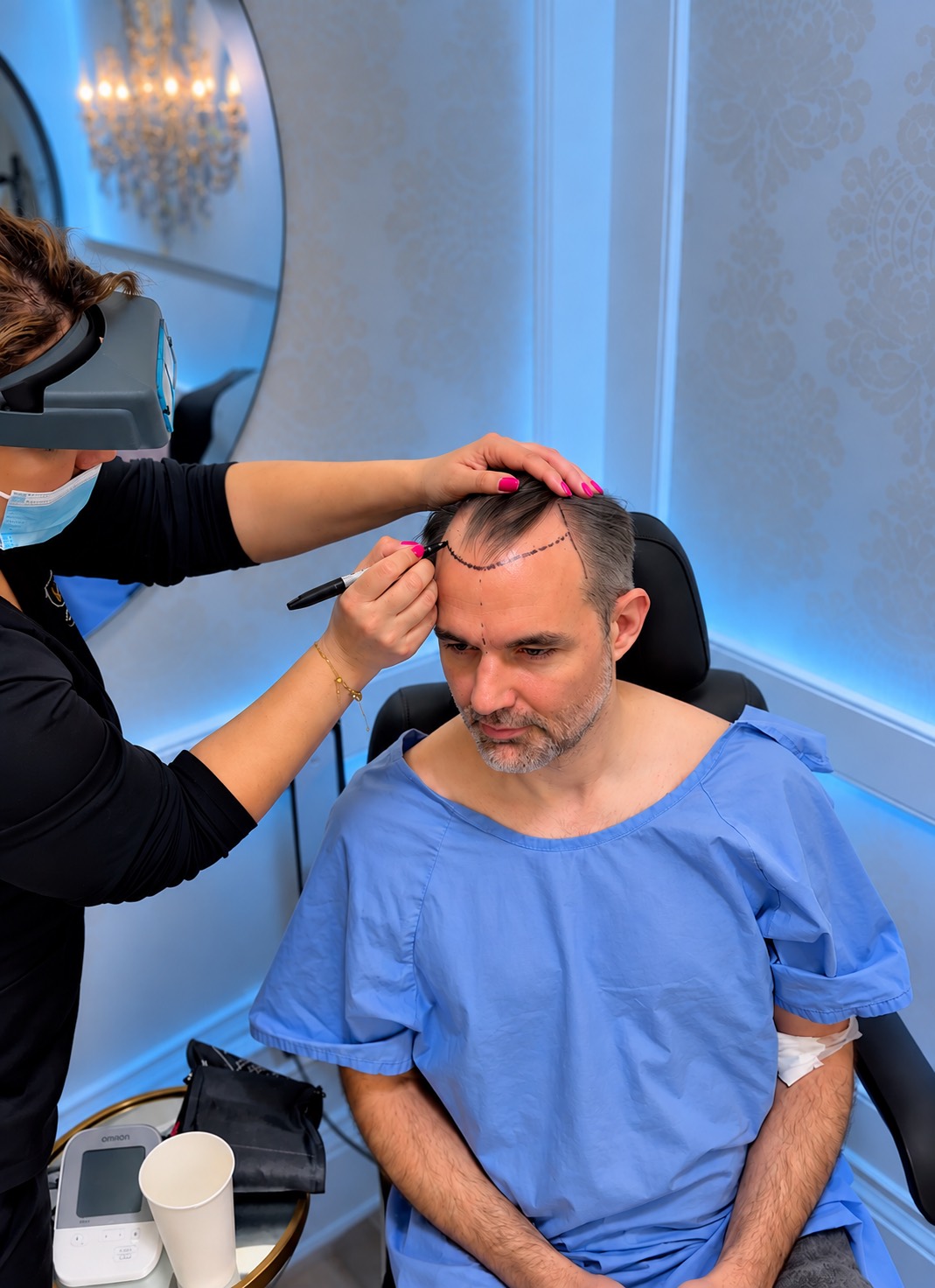
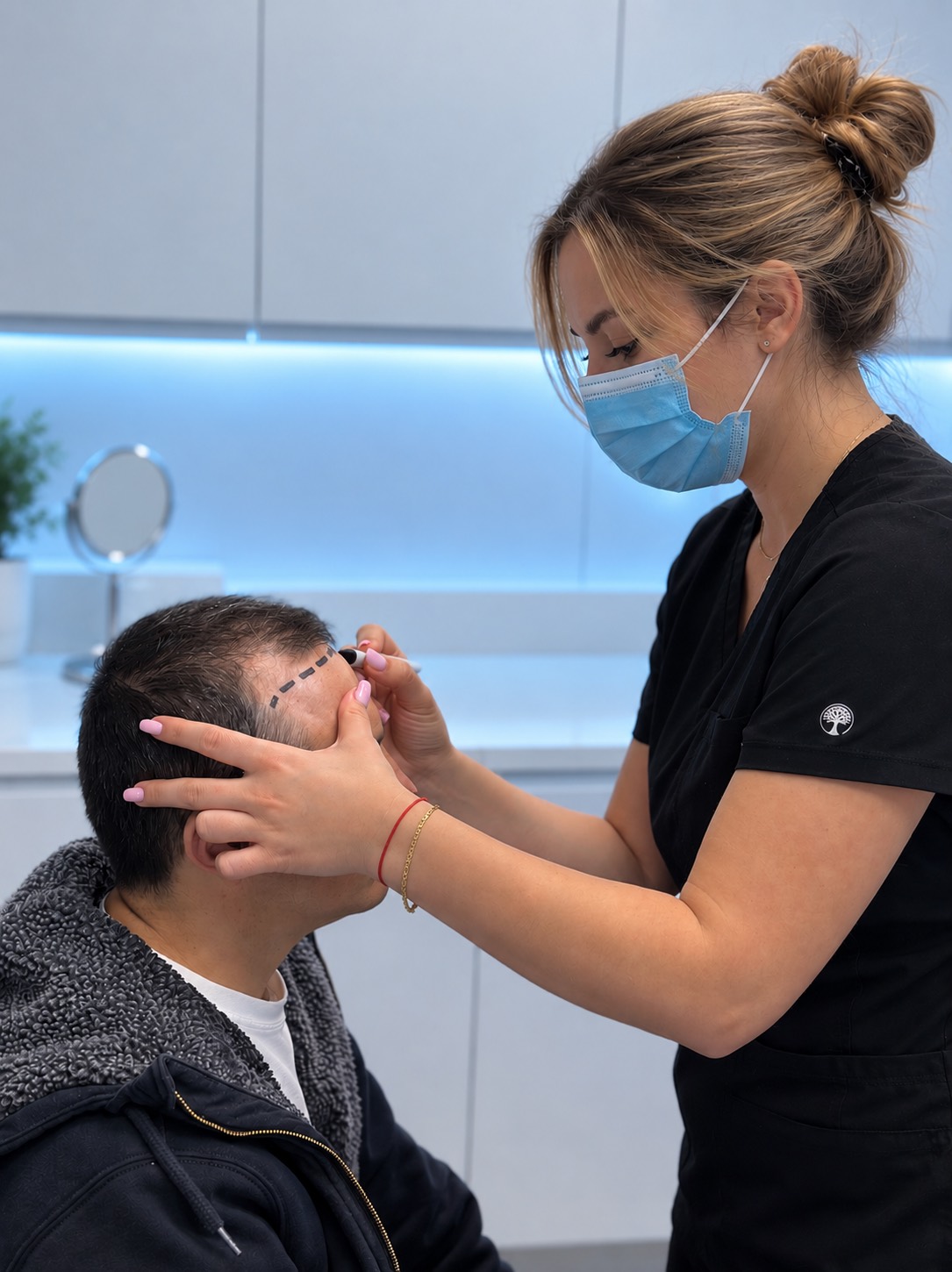
Next, with great attention to symmetry, our professionals will design your hairline. This is a thorough process that may entail developing a new hairline to create a natural look. We’ll also take reference photos of your hair for documentation purposes.
The Hair Transplant Procedure
Once the preparation is done, your hair transplant procedure will begin. For FUE, the hair at the back of your head will be trimmed short. If the strip method is used, only the specific area where the strip will be taken will be trimmed.
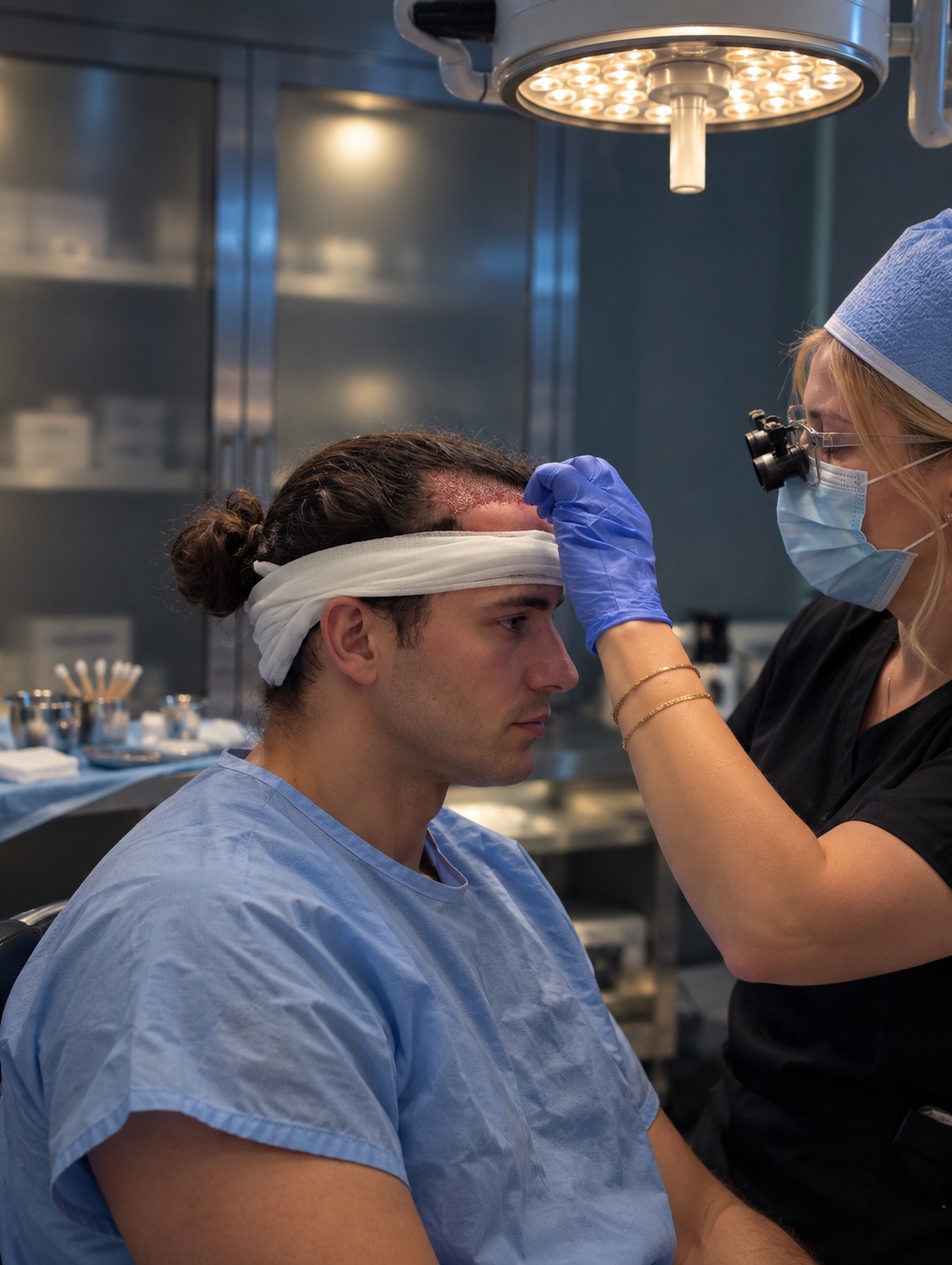
You will then be taken to the surgical room, where a local anesthetic will be applied to numb your scalp. Once the anesthetic takes effect, the surgeon or technician will start collecting grafts. In the FUE process, each hair follicle is carefully removed one by one using a high-powered magnifying tool. With the strip method, a section of the scalp with hair is removed and then stitched up to minimize scarring.
As grafts come out, the team sorts them by how many hairs each one holds, keeping single-hair grafts for the very front of the hairline and fuller grafts for the areas behind it. That is how density is built up without a hard, artificial edge.
During graft harvesting, you will lie face down to give the surgeon the best access to the donor area.
To make this part more comfortable, you might want to bring headphones to listen to music or podcasts, or you can use the time to take a relaxing nap.
Graft Preparation and Implantation
Each graft is looked at under a microscope to make sure it is of the highest quality after it has been harvested.
The next step is the implantation process which will utilize the “stick and plant” method to put in the grafts. This is done by putting each graft into a receiver site that has already been gently made. This speeds up the process and makes sure that the grafts are placed correctly so that the result looks natural.
During the insertion phase, you will sit in a slightly reclined chair. Once the process is finished, you’ll likely be pleasantly surprised by how easy and painless it was. Visit our clinic’s reviews and gallery to learn about what other patients have said about their experiences and to read their comments.
The Hair Transplant Recovery Process
Immediate Post-Procedure Care
After a hair transplant at our Long Island clinic, patients can leave without the need for bandages and can immediately enjoy the look of a fuller head of hair.
Postoperative care includes taking antibiotics and medications to minimize swelling, especially during the first three days after the procedure. Mild pain relievers are recommended to ensure comfort while you sleep for the first two nights.
Returning to Daily Activities
Patients typically return to work and everyday activities quickly, experiencing minimal downtime. Gentle hair washing is allowed post-surgery.
More vigorous activities such as swimming, intense workouts, sexual activity and weightlifting should be postponed for about one to two weeks to facilitate proper healing.
Hair Growth Timeline
New hair growth begins to become noticeable around four to six months post-transplant. Many patients accelerate this process by applying Minoxidil, a topical hair growth treatment, each evening.
The full results of the hair transplant are usually seen between 12 to 18 months, with the newly transplanted hair expected to grow and last for many years.