
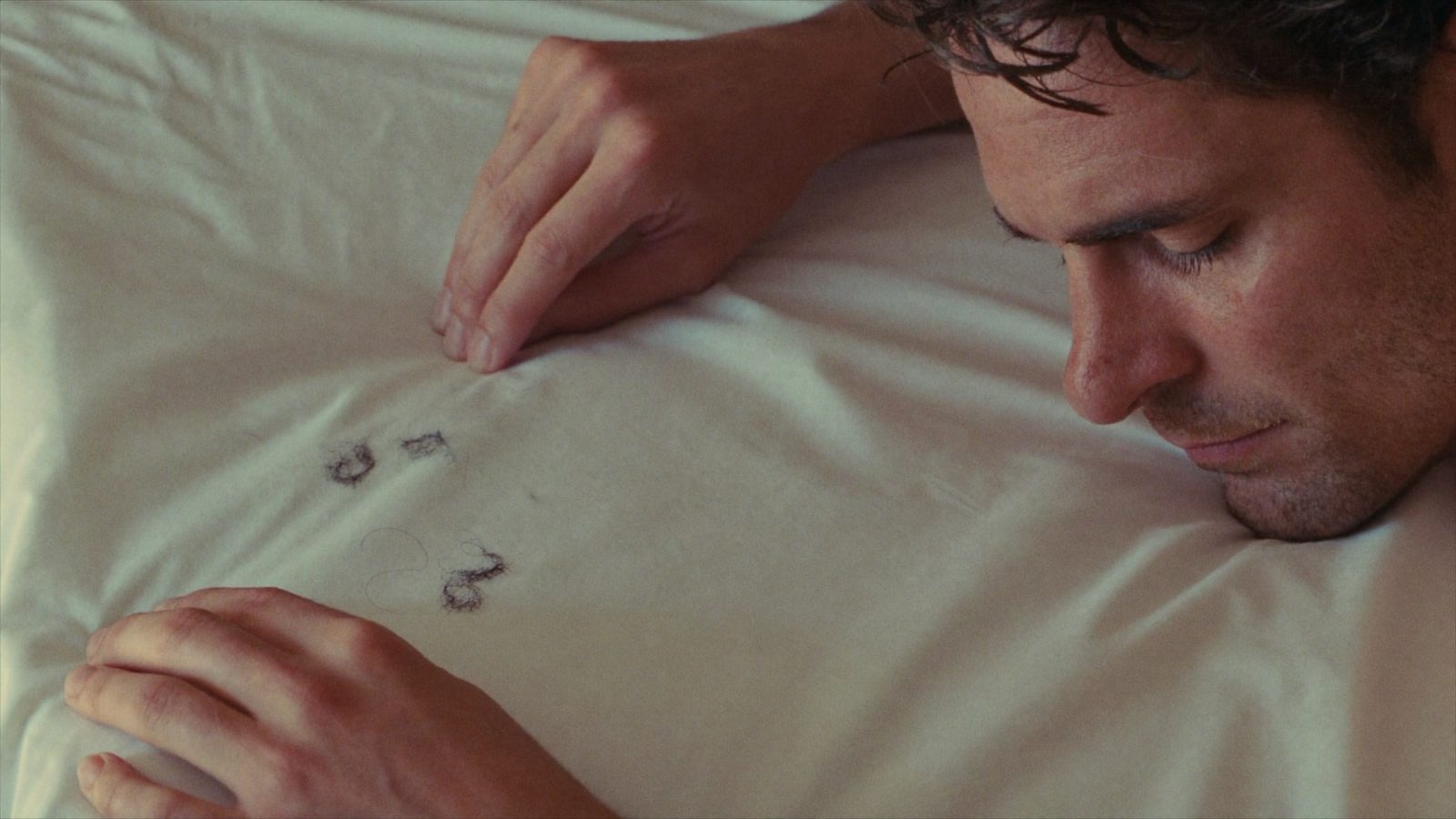
Shedding after hair transplant surgery is normal, expected and temporary. Somewhere between the second and eighth week, most of the short hairs that were placed into your scalp fall out, while the follicles beneath them stay rooted and switch into a resting phase. New growth usually starts around month 3 or 4. If you are in the middle of this stage right now and the mirror looks worse than it did before surgery, you are not alone, and nothing has gone wrong. Our guide to hair transplant recovery on Long Island covers aftercare as a whole; this article focuses on one question only: why the hair falls out and what that means for your result.
We hear the same worry in follow-up visits at our Melville clinic almost every week. A patient finds a few hairs on the pillow, then a few more in the shower drain, and starts to wonder whether the grafts have failed. Below we explain the biology in plain terms, separate graft shedding from shock loss in your existing hair, show what a typical shedding pattern looks like week by week, and list the signs that do justify a call to the clinic.
Quick Answer: The Hair Shaft Leaves, the Follicle Stays
Most transplanted hairs shed between weeks 2 and 8 after surgery, but the follicle that produces the hair remains anchored in the skin and begins a fresh growth cycle from about month 3 or 4. What you lose in this phase is the visible shaft, the short stub of hair that came along with each graft. What you keep is the living root structure, the part that matters.
Think of it as a reset. Each graft was removed from the donor area, kept outside the body for a period of time, and then placed into a new site with a new blood supply. That disruption tells the follicle to drop its current hair and rest before it builds a new one. The new hair that eventually grows is typically finer at first and thickens over the following months.
Key point: A graft is considered established once it has been in place for roughly 10 to 14 days. After that point, a hair falling out of it does not mean the follicle came with it. Hairs shed after the first two weeks are part of the normal process, not a sign of lost grafts.
There are three facts worth holding on to when the shedding phase feels discouraging:
- It is expected. Shedding is so common that we plan follow-up conversations around it. Some patients shed almost every transplanted hair; a smaller number keep a portion of them.
- It is temporary. The resting phase usually lasts a few months, not a year.
- It says nothing about the final result. Patients who shed heavily and patients who shed lightly can end up with very similar density at the 12 to 18 month mark.
Why Grafts Shed: The Hair Growth Cycle in Plain Terms
Grafts shed because every hair follicle runs on a cycle, and surgery pushes transplanted follicles out of their growing phase and into rest. Once you understand that cycle, the shedding stage stops looking like a mystery.
The three phases that matter
Dermatologists, including the American Academy of Dermatology in its patient education material, describe the hair cycle in three main stages:
- Anagen (growth). The follicle is active and the hair lengthens steadily. On a healthy scalp, most hairs are in this phase at any given time, and it can last several years.
- Catagen (transition). A short stage of a few weeks in which the follicle shrinks and the hair detaches from its blood supply.
- Telogen (rest). The follicle is dormant. The old hair is released and falls out, usually when a new hair begins to push up underneath it. Normal daily hair loss on an untouched scalp comes mostly from hairs leaving this phase.
What surgery does to that cycle
During a transplant, follicular units are taken from the back and sides of the scalp, kept in chilled storage and then placed into tiny recipient sites. Whether the grafts were harvested with manual FUE using motorized handheld tools, by strip, or loaded into a DHI implanter pen, every graft goes through the same sequence: it is cut off from its blood supply, handled, and asked to reconnect in a new location.
The follicle responds to that stress in a predictable way. Rather than keep feeding the existing hair, it moves into the telogen phase. The hair shaft, which no longer has an active root pushing it, loosens and falls out over the next few weeks. Meanwhile the follicle uses the resting months to settle in, connect to local blood vessels and prepare a new anagen phase.
Why the new hair looks different at first
When the follicle restarts, the first hairs it makes are usually thin, sometimes slightly wavy or lighter in color, and they do not all appear at once. Different grafts wake up at different times, which is why early regrowth often looks patchy. Over the next several months the shafts grow thicker and more uniform. This is the reason we ask patients not to judge their result before the one-year mark, and why crown work in particular can take up to 18 months to mature.
The fact that transplanted follicles come from the donor zone also explains why the regrown hair tends to last. Those follicles are generally resistant to the hormone DHT that drives pattern hair loss. Our article on how long transplanted hair lasts goes into what stays stable over the decades and what can still change around it.
Shock Loss in Nearby Native Hair: Who Gets It and Whether It Returns
Shock loss is temporary shedding of your existing, non-transplanted hair near the surgical area, and in most cases that hair grows back within a few months. It is a separate event from graft shedding, even though the two often happen at the same time and can be hard to tell apart in the mirror.
Why native hair reacts
Making recipient sites means creating many small openings in the skin between existing hairs. The local swelling, the anesthetic and the general trauma of surgery can push nearby native follicles into the telogen phase as well. The donor area can react in the same way: some patients notice a slightly thinner look around the extraction zone a few weeks after surgery, which usually fills back in.
Who is more likely to notice it
From what we see in consultations and follow-ups, shock loss is more noticeable in a few groups:
- Patients with a lot of miniaturized hair. Hairs that are already thin and weakened by pattern loss are more fragile. A follicle that was close to giving up may not come back after the shock.
- Women with diffuse thinning. Because grafts are often placed between a fair amount of existing hair, the surrounding native hair is exposed to more of the surgical stress. Our female hair transplant planning takes this into account, which is one reason female procedures here include complimentary PRP.
- Dense packing into areas with existing hair. The more sites are made between healthy hairs, the higher the chance that some of them pause.
Does shock-loss hair come back?
Healthy native hair that sheds from shock almost always regrows, usually on a similar timeline to the grafts. The exception is hair that was already miniaturized and on its way out. In that case surgery may simply speed up a loss that was going to happen within the next few years. This is one of the reasons Dr. Prokurat reviews the degree of miniaturization, using the Norwood scale for men and the Ludwig scale for women, before deciding how many grafts to place and where.
Key point: Graft shedding affects the hairs that were moved. Shock loss affects the hairs that were already there. Both are usually temporary, but only shock loss in already weakened hair can be permanent, which is why stabilizing native hair before and after surgery matters.
Week by Week: What Sheds and What It Means
The table below shows a typical shedding pattern, not a fixed schedule. Your own timing can run a few weeks earlier or later. For the full aftercare calendar, including washing, sleeping position, exercise and return to work, read our day-by-day recovery guide. Here we only track what is happening to the hair itself.
| Period after surgery | What you may see | What is happening underneath | How to read it |
| Days 1 to 10 | Short hairs in each graft, small crusts, very few hairs lost | Grafts are anchoring and reconnecting to local blood supply | Handle gently; a hair lost with a crust in this window can occasionally mean a dislodged graft |
| Weeks 2 to 3 | Crusts lift; some hairs come out with them or soon after | Follicles are secure and starting to enter the resting phase | Normal; hairs leaving now are shafts only |
| Weeks 3 to 6 | Shedding usually peaks; the recipient area can look close to its pre-surgery state | Most transplanted follicles are in telogen; native hair may also shed from shock | The stage that worries people most, and the one that means least |
| Weeks 6 to 8 | Shedding slows and mostly stops; scalp may look thin or uneven | Follicles are resting and settling in | Expected; patience matters more than any product here |
| Months 2 to 3 | Little visible change, occasional small bumps where hairs are about to emerge | Follicles are preparing a new growth phase | Normal lag between shedding and regrowth |
| Months 3 to 5 | Fine new hairs appear, often unevenly | Anagen restarts across the grafts at different times | Regrowth has begun; density is not yet meaningful |
| Months 6 to 18 | Hairs thicken, lengthen and blend with native hair | Shafts mature in diameter and texture | The period in which the real result appears |
Some patients are surprised by how complete the shedding can be. It is not unusual for the recipient area at week 5 or 6 to look much like it did before surgery, minus some redness. People sometimes call this stretch the ugly duckling phase, and it can last from roughly the second month until new growth shows through in month 4 or so. Knowing that in advance makes it much easier to get through.
Why the timing varies
Several factors push the curve earlier or later: how many grafts were placed, how densely, whether the area was the hairline or the crown, your skin type, your age and the natural speed of your own hair cycle. The crown, for example, often regrows more slowly than the front. None of these differences predicts a poorer result on its own.
What Helps During the Shedding Phase
Nothing can stop transplanted hairs from shedding, because the shedding is part of how the follicle restarts, but a few measures can protect your native hair, support healthy regrowth and make the waiting period easier to live with.
Gentle care, not intervention
Once your crusts have cleared and your aftercare instructions allow normal washing, the shedding hairs will come out on their own. Do not pull at them, scrub to remove them or try to keep them in. Washing as instructed, avoiding harsh styling and heat on the recipient area in the early weeks, and protecting the scalp from strong sun are simple steps that keep the skin calm while the follicles rest.
Medication for native hair
Finasteride and minoxidil are the two FDA-approved medications for pattern hair loss, and they work on your native, non-transplanted hair. Their role around surgery is mainly to slow ongoing loss and to help shock-loss hair return. Whether you should use either one, when to start or restart it after surgery, and in what form are decisions to make with your physician, since both have side effects and are not suitable for everyone. Our article on using finasteride and minoxidil after surgery explains the reasoning in more detail. Please do not start, stop or change either medication based on an article alone.
PRP as a supporting treatment
Platelet-rich plasma, prepared from a small sample of your own blood, is used by many clinics as a supporting treatment around the time of a transplant. The goal is to support the scalp environment and the surrounding native hair, not to prevent the shed itself. Evidence for PRP is still developing and results vary from person to person, so we present it as an option rather than a necessity. If you want to understand how sessions work and who tends to be a reasonable candidate, see our page on PRP for hair loss.
Managing how it looks
Practical tactics help more than most people expect. A slightly longer haircut on the top and sides can soften the contrast; a loose, unstructured cap is fine once your aftercare instructions allow it; and some patients schedule surgery so that the weeks 3 to 8 window falls during a quieter period at work. Concealer fibers and similar products should only be used once the recipient area has fully healed and your clinic has cleared them.
Patience, and a fixed photo routine
The most useful habit we recommend is a simple one: take photos in the same spot, under the same light, once a month, rather than checking the mirror every day. Daily checks during the shedding phase only magnify every hair on the pillow. Monthly photos show the trend, and from month 4 onward that trend is usually encouraging.
| Measure | What it targets | Effect on graft shedding |
| Gentle washing as instructed | Healing skin, crust removal | None on timing; keeps the area healthy |
| Finasteride or minoxidil (physician decision) | Native hair affected by pattern loss | Does not prevent graft shedding; may help shock-loss hair recover |
| PRP sessions | Scalp environment and native hair | Does not stop the shed; used as supporting care |
| Monthly photos | Your own peace of mind | None; makes progress easier to judge |
When Shedding Is a Reason to Call the Clinic
Shedding on its own is rarely a reason for concern, but you should contact the clinic if hair loss comes with signs of infection, if grafts appear to come out with tissue in the first ten days, or if you see no new growth at all well past the expected window.
Call us if you notice any of the following:
- Signs of infection: increasing pain, warmth, swelling or redness that spreads after the first few days, pus, or fever.
- Bleeding or a visible pit where a graft used to be, especially after a knock or scratch in the first week or so.
- Persistent itching or bumps that do not settle, which may need simple treatment rather than waiting it out.
- Patchy loss outside the surgical area, such as round bald spots elsewhere on the scalp, which can point to a different type of hair loss that deserves its own assessment.
- No visible new hairs by around month 6, when most patients have at least clear early regrowth. Slow starters exist, but this is a good time for a review.
Things that usually do not need a call: hairs on your pillow in weeks 2 to 8, a recipient area that looks thin in month 2, small bumps resembling spots as new hairs push through, and native hair that thins temporarily near the grafts. If you are unsure, it is always fine to send photos or book a follow-up. We would much rather answer a question early than have you worry for weeks.
The International Society of Hair Restoration Surgery (ISHRS) encourages patients to stay in contact with the treating clinic during the first year, and that is how we approach it too. Follow-up is part of the plan, not an extra.
How Shedding Is Factored Into Your Plan Before Surgery
A good transplant plan accounts for shedding before the first graft is placed, so the shedding phase becomes something you expected rather than something you discovered. In practice that means a few decisions made at the assessment stage.
First, Dr. Prokurat reviews how much of your existing hair in the planned zone is healthy and how much is miniaturized. If a large share is weakened, the plan may include stabilizing medication discussed with your physician, PRP, or a more conservative graft placement among existing hairs, to reduce the chance of permanent shock loss. Second, graft numbers and spacing follow the Nova Medical FUE Protocol, which keeps grafts in chilled storage and places them with careful spacing so the scalp is not overloaded. You can read about that approach on our Nova Medical FUE Protocol page.
Third, we talk through timing. A patient with a wedding, a job interview or a summer of public events coming up may prefer a surgery date that puts the weeks 3 to 8 window somewhere less visible. None of this changes the biology, but it changes how manageable the shedding stage feels.
Finally, we are honest about candidates. If your hair loss is still changing quickly, if your donor supply is limited, or if your expectations rely on seeing full density within a few months, surgery may not be the right step yet. The shedding stage is easier for patients who start with realistic timelines.
Shedding Support From Our Long Island Team
Every patient at Nova Medical Hair Transplant Long Island leaves with written aftercare instructions and a follow-up schedule that covers the shedding months, not just the first week. Our clinic is at 445 Broadhollow Rd on Route 110 in Melville, a short drive from the Long Island Expressway, so follow-up visits are straightforward for patients across Nassau and Suffolk counties.
If you have not had surgery yet and want to understand what your own recovery would look like, the free assessment is the place to start. A member of our team reviews your hair loss pattern, donor density and goals, Dr. Prokurat reviews the plan, and you receive a written quote. Pricing runs from $3.99 to $7.99 per graft, most procedures total $4,000 to $15,000, there are no session fees, and 0% interest financing is available for the first 12 months. You can see healed results, many of which went through exactly the shedding phase described here, in our before and after gallery.
If you already had your procedure with us and the shedding is worrying you, call (516) 202-7223 between 9am and 6pm, Monday to Friday. Hairs on the pillow are usually the start of the process, not the end of it, and the follicles under them are still doing their work.
Medically reviewed by Dr. Val Prokurat, MD. Dr. Prokurat is a physician with advanced training in minimally invasive techniques who reviews and oversees every treatment plan at Nova Medical Hair Transplant Long Island, 445 Broadhollow Rd in Melville. This article is for general education and is not a substitute for an in-person medical assessment. Individual results vary. Read more about Dr. Prokurat.
Questions About Shedding?
Whether you are planning a transplant or in the middle of the shedding phase, our Melville team can walk you through what is normal for your scalp. Book a free assessment or call us.