
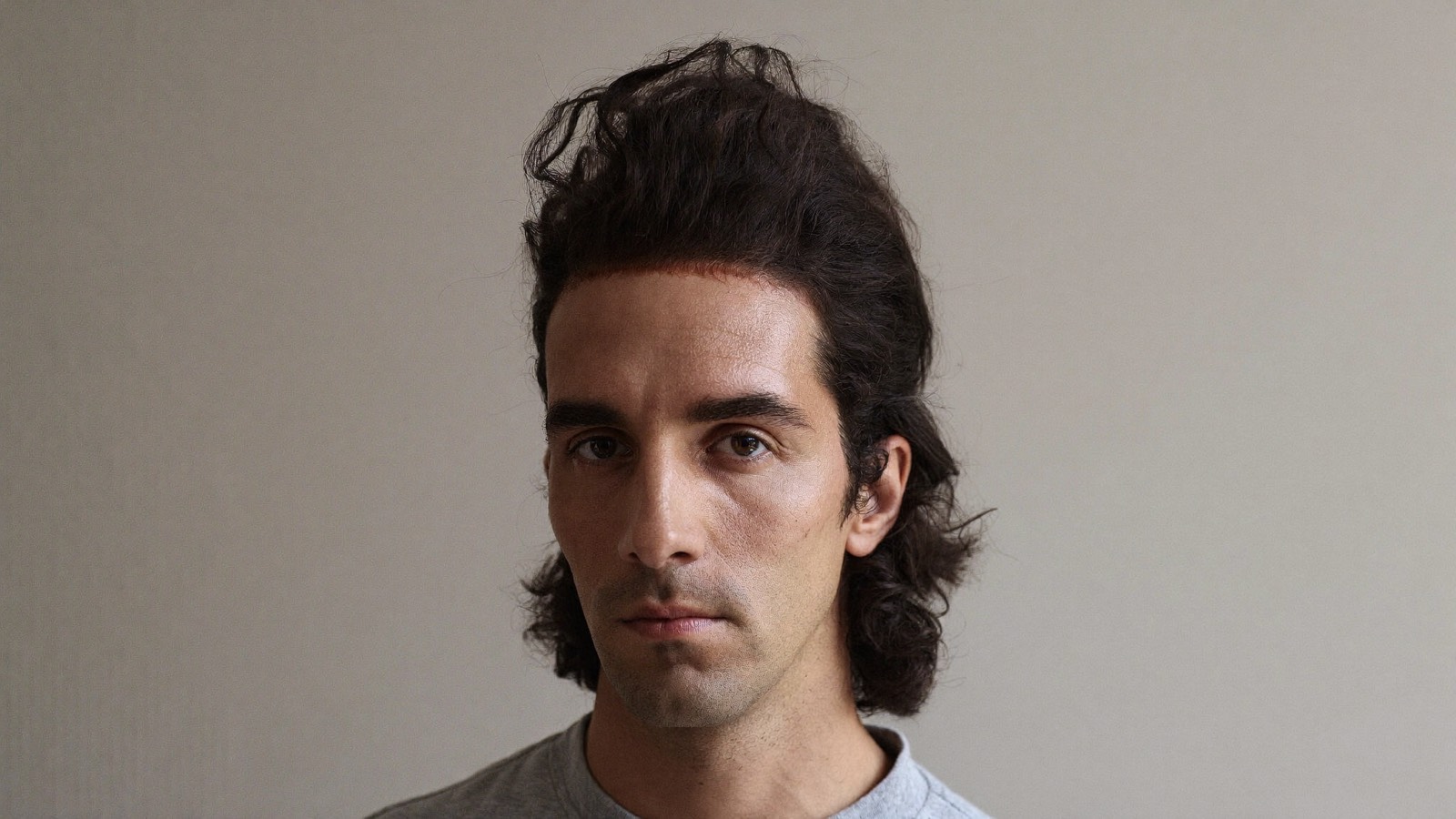
A widow's peak hair transplant can do one of two things, depending on your goal. It can soften a sharp peak by filling the recessions on either side of it, so the hairline reads as a gentle curve, or it can lower a high hairline while keeping the peak as a feature. Both use fine single-hair grafts placed along a new front edge, and both are planned around your face rather than a template. At our Melville clinic, this work is part of FUE hair transplant on Long Island, and the choice between softening and lowering is made with you at the consultation.
This guide explains how to tell a natural widow's peak from a receding one, what filling the corners involves, how a high hairline is lowered for men and women, roughly how many grafts each approach takes, and the cases where keeping the peak is the better decision. General hairline design is covered in our guide to hairline design for your face shape, and the temples have their own article; here the focus stays on the peak.
Quick answer: a transplant can soften a sharp peak by filling the corners beside it, or lower a high hairline while keeping the peak. Which one suits you depends on whether the peak is a natural feature you have always had or the leftover center of a receding hairline.
A Natural Widow's Peak vs. a Receding One
A natural widow's peak is a V-shaped dip at the center of the hairline that has been there since childhood, with full hair on either side of it. It is a normal variation, not a sign of hair loss, and many people keep it for life. A receding peak looks similar from the front but has a different history: the corners of the hairline have moved back while the center has held, leaving a point where there used to be a curve.
The difference matters because it changes the plan. A natural peak on a stable hairline can be left alone or refined. A receding peak is usually the early stage of pattern hair loss, where the American Academy of Dermatology notes the corners thin first, and the plan has to account for loss that may continue behind it. Old photos settle the question quickly: if your hairline at 18 had the same point, it is natural.
Softening the Peak: Filling the Recessions
Softening a peak means adding hair to the two recessions beside it until the hairline forms a smoother curve. The peak itself is not removed; it simply stops standing out once the corners catch up. Grafts are placed with single hairs at the very front for a soft edge and two-hair grafts just behind for body, following the direction of the existing hair so the new corners blend in.
This approach suits men whose corners have receded but whose center is still strong, and anyone who finds their peak reads as a sharp arrow rather than a feature. It usually takes fewer grafts than lowering, because the recessions are small, and it leaves the overall hairline height where it is. If the temples have hollowed as well, that is a separate area, covered in our guide to temple point restoration.
Lowering a High Hairline for Men and Women
Lowering a hairline means placing a new front edge below the existing one and filling the band in between. The peak can be kept, softened or redrawn as part of the new line. The amount of lowering is measured in centimeters rather than guesswork, and a conservative figure, often around 1 to 2 centimeters, keeps the result in proportion with the forehead and the rest of the face.
For women, lowering a naturally high hairline is one of the more common reasons to consider a transplant, because the hairline is often stable and the goal is proportion rather than repair. Density is planned to match the hair behind it, and the new edge follows a slightly rounded shape with gentle irregularity, since a perfectly straight line looks drawn on. Our female hair transplant on Long Island page explains how planning differs for women, including the Ludwig scale used to stage female pattern thinning.
For men, lowering is approached more cautiously. A low hairline placed at 28 can look out of place at 50 if loss continues behind it, so the plan considers family history and the likely Norwood pattern before setting the new line.
Goal vs. Approach vs. Typical Grafts
| Your goal | Approach | Typical grafts |
| Soften a sharp peak, keep hairline height | Fill both recessions to a smoother curve | 400 to 900 |
| Soften the peak and rebuild thinning temples | Fill recessions plus temple points | 700 to 1,300 |
| Lower a high hairline, keep the peak | New front edge 1 to 2 cm lower, band filled | 1,200 to 2,000 |
| Lower and round the hairline (often women) | New curved edge, peak softened into the line | 1,500 to 2,500 |
These are ranges for planning conversations, not quotes. Hair thickness, curl, color contrast with the skin and the density you want all move the number. Grafts are priced at $3.99 to $7.99 each at our clinic, with most procedures between $4,000 and $15,000.
Keeping the Result Natural
The front edge is where a peak transplant succeeds or fails. A natural hairline is irregular at a fine scale, with single hairs scattered a few millimeters ahead of the main line, so the edge is built with single-hair grafts set at a flat angle and pointing forward and slightly to the sides, never straight up. Density rises gradually over the first centimeter behind the edge rather than jumping. The International Society of Hair Restoration Surgery describes these principles in its guidance on hairline design, and they apply whether the peak is softened or kept. Our article on natural looking hair transplants covers the design choices that make the difference.
When to Keep Your Peak
Keeping the peak is often the right call. If the peak is natural and the hairline is stable, it is a feature of your face, and removing it can make the forehead look wider and the face less distinctive. If your loss is still moving quickly, filling the corners now may need redoing later, and it can be wiser to stabilize first. And if you simply like the look, that settles it; a transplant is for changing what bothers you, not what someone else notices.
The useful test is to ask what you would want the hairline to look like in ten years. A peak softened into a gentle curve ages well. A peak lowered to a youthful height on a man with a strong family history of loss may not.
How the Decision Is Made at a Consultation
At our Melville clinic, the consultation starts with your history and old photos, then a close look at the hairline and donor area. Both options are drawn on your skin so you can see them in a mirror from the front and the side. Dr. Val Prokurat, MD reviews and directs every plan, and the in-house team carries out extraction and placement. You leave with a written plan showing the chosen approach, the graft count and the price, with no obligation to book.
See Your Peak Both Ways
Come in for a free consultation at 445 Broadhollow Rd, Melville, NY 11747. We draw a softened peak and a kept peak on your own hairline, explain the graft count for each and give you a written plan. Phone (516) 202-7223, weekdays from 9am to 6pm.