
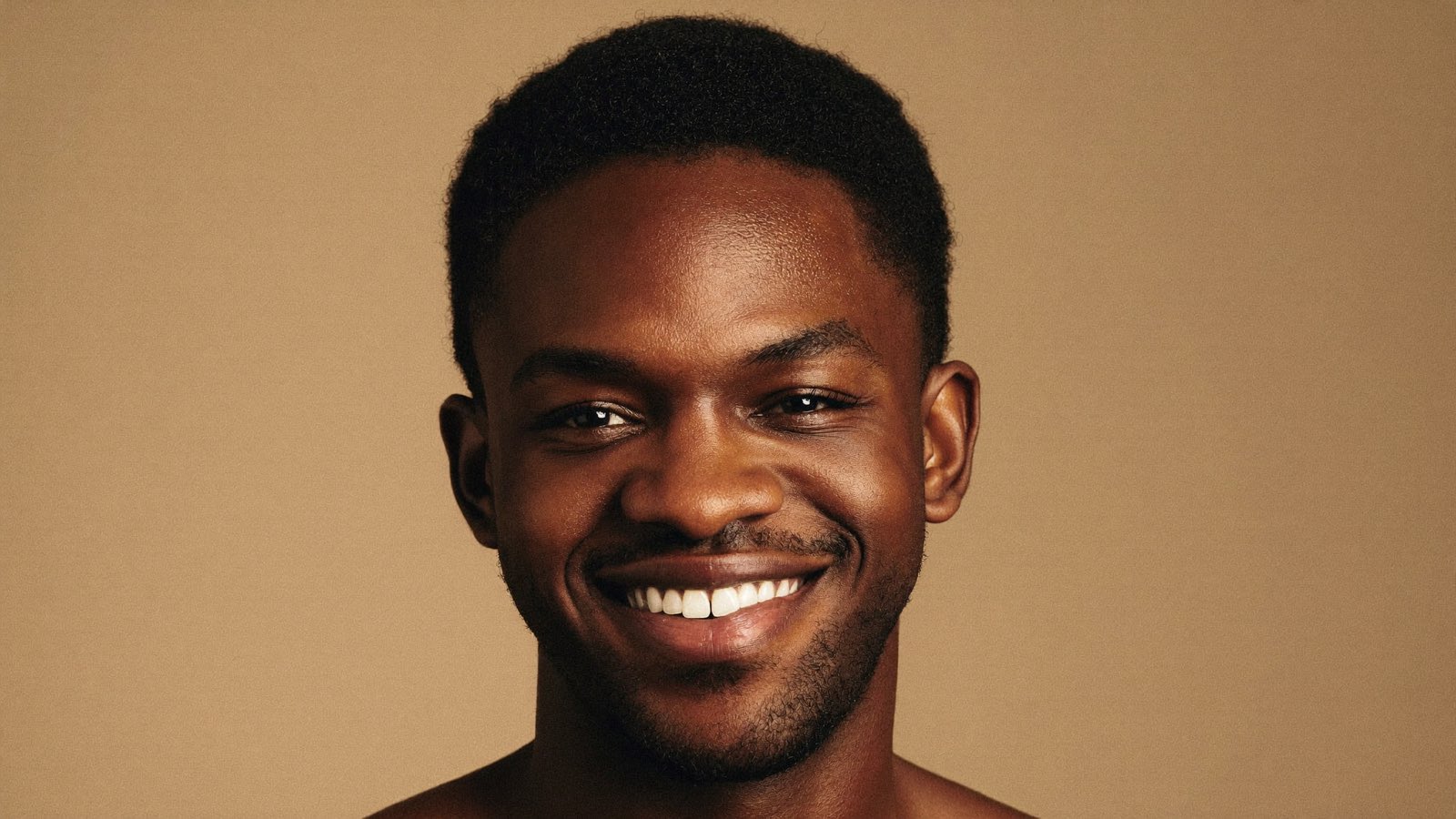
An Afro or curly hair transplant can give excellent, natural results, but it is planned differently from a transplant for straight hair. Afro-textured and tightly curled hair grows from follicles that curve beneath the skin, so the team has to extract each graft with extra care to avoid cutting through it. Curl also works in your favor, because coiled hair covers more scalp per graft. At our hair transplant clinic on Long Island, these details are part of the plan from the first consultation.
This guide explains what makes Afro and curly hair transplants different, from the shape of the follicle to the design of the hairline. It also covers keloid and scarring checks, and what traction alopecia from tight styles means for a transplant.
Quick answer: Afro and curly hair can be transplanted well. The curved follicles need slower, more careful extraction by an experienced team, and skin is screened for keloid tendency first. Because curls overlap, a natural, full look often takes fewer grafts than straight hair would.
Why Curved Follicles Change Extraction
Curved follicles change extraction because the root does not follow the angle of the hair above the skin. In straight hair, the follicle runs in a fairly straight line from the surface down to the bulb, so the extraction tool can follow the visible hair. In Afro-textured hair, the follicle often bends or curls under the skin, sometimes in a C or S shape.
If the tool follows the surface angle too deeply, it can cut across the curved part of the follicle. This is called transection, and a transected graft may not grow. To reduce that risk, the team adjusts how deep and at what angle each graft is scored, may use a slightly wider punch, and works more slowly than with straight hair. Hand-held tools give the control to make small adjustments graft by graft, which our article on manual vs robotic FUE explains in more detail.
The approach is the same FUE technique used for any hair type, carried out with extra attention to depth, angle and handling. A test of a few grafts at the start of the procedure is often used to confirm how your follicles curve before the main extraction begins.
Coverage: Why Curls Can Look Fuller With Fewer Grafts
Curls can look fuller with fewer grafts because each coiled hair takes up more space and lifts away from the scalp. Where a straight hair lies flat and covers a narrow strip, a curly or coiled hair spreads outward and overlaps its neighbors, hiding more skin underneath.
That means a natural, dense look can often be reached with a lower graft count than the same area would need with straight hair. Lower contrast between hair and skin color can also help coverage look fuller. This is good news for the donor area, because grafts saved now remain available if more are needed later. Our guide to how many grafts you need covers how counts are worked out by zone.
Keloid and Scarring Considerations
Keloid and scarring risk is checked before any procedure, because some people with darker skin are more prone to raised or thickened scars. A keloid is a scar that grows beyond the original wound. While FUE leaves only tiny, round marks, anyone with a history of keloids needs careful assessment first.
At consultation, the team asks about previous scars, ear piercings, surgery or injuries that healed with raised scarring, and checks your skin. If there is a concern, a small test area may be suggested before a full session. FUE is generally preferred over FUT for people with keloid risk, because it avoids a long linear incision, and our comparison of FUE vs FUT explains the difference.
Straight vs Wavy vs Afro-Textured Hair in Transplants
The table below compares how hair type affects key parts of a transplant. These are general patterns; your own plan depends on your hair and skin.
| Factor | Straight hair | Wavy hair | Afro-textured hair |
| Follicle shape under the skin | Mostly straight | Gently curved | Curved or coiled |
| Extraction difficulty | Standard | Moderate | Higher; slower and more careful |
| Transection risk | Lower | Moderate | Higher without adjusted technique |
| Coverage per graft | Lower | Moderate | Higher, as curls overlap |
| Keloid screening | Routine | Routine | Especially important |
| Typical hairline shape | Often softly receded | Varies | Often straighter, with defined corners |
Hairline Design for Afro-Textured Hair
A hairline for Afro-textured hair is usually designed to be fuller and more defined than a typical hairline for straight hair. Many natural Afro hairlines are flatter across the front, with sharper temple corners and less of the deep recession seen in many straight-haired patterns. A design that copies a straight-hair template can look out of place.
Design also follows how the hair grows and how you style it. Close-cropped cuts, fades and lined-up edges show the hairline clearly, so the shape and the direction of each graft matter a great deal. Our article on a natural looking hair transplant explains how the front edge is softened and shaped. At our Melville clinic, the in-house team carries out extraction and placement, and Dr. Val Prokurat, MD reviews and approves every hairline design.
Traction Alopecia From Tight Styles
Traction alopecia is hair loss caused by repeated pulling, often from tight braids, weaves, extensions or ponytails worn over many years. It usually affects the hairline and temples. In its early stages, loosening styles can let hair recover, but long-standing traction can damage follicles permanently.
When follicles are gone, a transplant can restore the hairline, as long as the pulling has stopped and the area has stabilized. The plan also needs a styling approach that protects the new grafts in the future. Women with traction alopecia can find more about how assessment works on our female hair transplant page.
Preparing For and Recovering From the Procedure
Preparation for an Afro or curly hair transplant is mostly about hairstyles and products. Tight braids, weaves, locs or extensions are usually removed a little while before the procedure, so the team can see your donor area and scalp clearly and the skin is not under tension. Heavy oils and styling products are usually skipped on the day.
After the procedure, healing follows the same stages as any FUE: small crusts clear within about one to two weeks, and transplanted hairs commonly shed in the first month before regrowing. Your instructions will say when you can return to braiding, tight styles, chemical relaxers or dyes. Many people are advised to wait several weeks for gentle styling and longer for anything that pulls or uses strong chemicals, so the new grafts can settle without strain.
Cost and Planning in Melville
Afro and curly hair transplants are priced per graft like any FUE, at $3.99 to $7.99 per graft, with most cases between $4,000 and $15,000, no session fees and 0% financing for the first 12 months. Because curls often give more coverage per graft, the graft count, and so the total, can sometimes be lower than expected. Your written quote after consultation is the figure to rely on.
Plan a Transplant Around Your Hair
Book a free consultation at Nova Medical Hair Transplant Long Island, 445 Broadhollow Rd, Melville, NY 11747. We look at how your follicles curve, check your skin and donor area, and design a hairline that suits your face. Call (516) 202-7223, Monday to Friday, 9am to 6pm.