
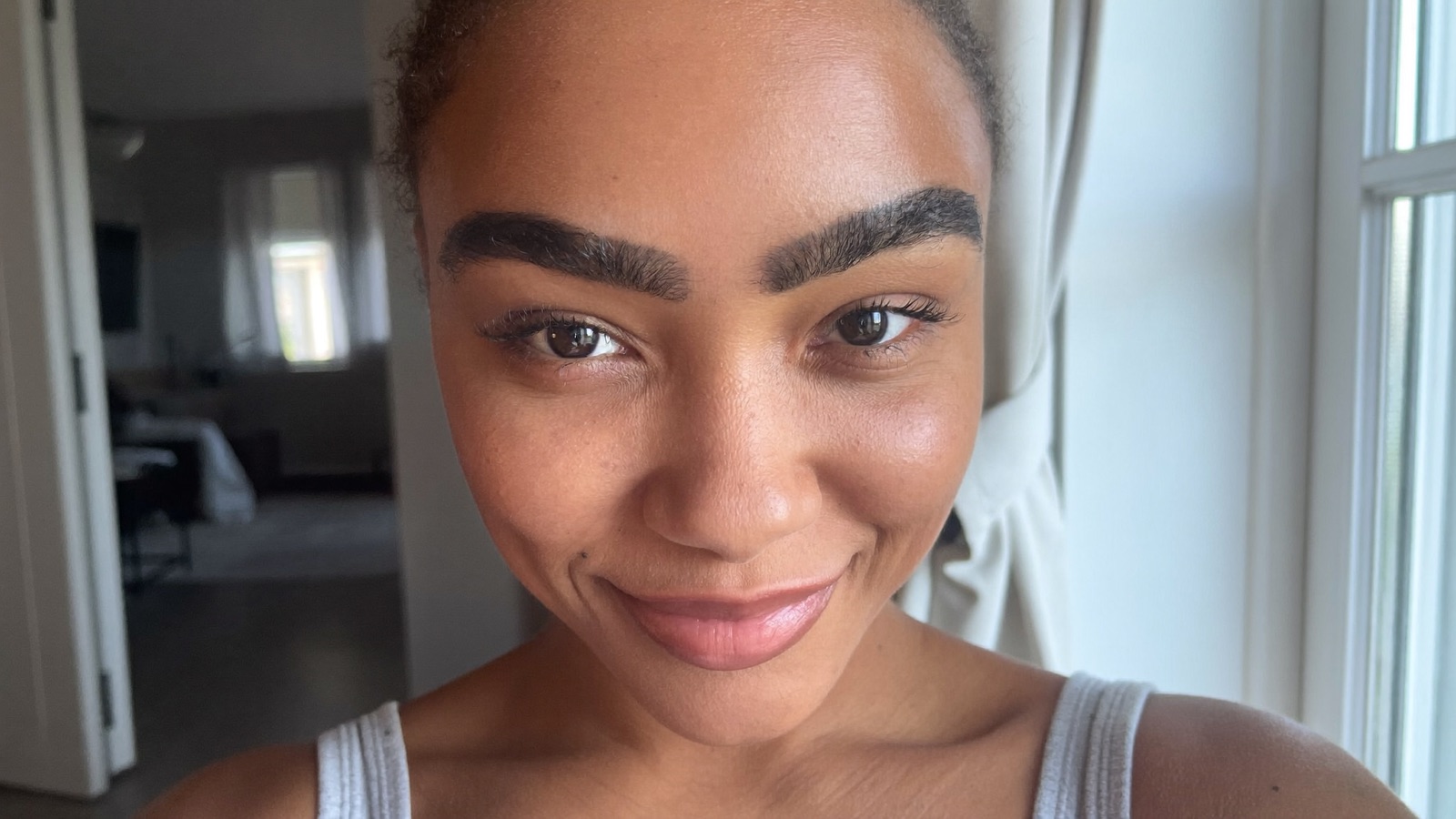
An eyebrow transplant rebuilds thin or missing brows by moving fine hairs, usually from the back of the scalp, and placing them one at a time at a very flat angle so they lie along the skin like natural brow hair. Most people see new growth from around three months, with the full result at about 9 to 12 months, and eyebrow transplant recovery itself is usually a matter of one quiet week. Our eyebrow transplant on Long Island page covers the procedure and pricing; this guide walks through the whole journey from design to trimming.
Brows frame the face, and small differences in their shape change how you look more than most people expect. That is why eyebrow work is planned as carefully as a hairline, with more attention to angle than almost any other area. Below is what a typical eyebrow transplant involves, who it helps, how it compares with microblading and serums, and what life with transplanted brows is like.
Quick answer: fine, single-hair grafts from the scalp are placed at a flat angle to rebuild the brow; growth usually starts at about three months and reaches its final look around 9 to 12 months. Because the hair keeps its scalp character, transplanted brows grow longer and need regular trimming.
Who Eyebrow Transplants Help
Eyebrow transplants mostly help people whose brows have thinned or stopped growing in a way that is not likely to recover on its own. The most common reasons are years of overplucking or waxing, scars from injury or surgery, and brows that have always been naturally sparse or patchy. Some people also want to restore the outer tail of the brow, which often thins with age.
- Overplucking: repeated plucking can damage follicles so they no longer produce hair.
- Scars: hair does not regrow through scar tissue, but grafts can often be placed into it.
- Naturally thin or uneven brows: grafts can add density or even out the two sides.
- Thinning with age: the outer third of the brow often fades first and can be rebuilt.
Some causes need a different first step. Brow loss linked to a medical condition, such as an autoimmune condition or a thyroid problem, should be assessed and treated before any transplant is considered, because grafts may not hold up if the underlying cause is still active.
Designing the Shape
The brow shape is designed before any graft is planned, usually by sketching it on your face with a cosmetic pencil and adjusting it until it suits your features. Most designs follow natural landmarks: where the brow starts in line with the side of the nose, where it arches, and where the tail ends toward the outer corner of the eye.
Natural brows are not uniform. The inner part, near the nose, usually has hairs that point upward, while hairs through the body and tail lie more flatly and point outward. A good design maps those directions and builds a soft front that thickens slightly through the body before tapering at the tail. Matching the brows to each other, rather than making them identical, also looks more natural, since most faces are slightly asymmetric.
The design is reviewed in the mirror and photographed so you can see it from a normal distance. Nothing is planned until you approve the shape, and it is checked again on the day of the procedure.
How Many Grafts an Eyebrow Transplant Needs
An eyebrow transplant usually needs a few hundred grafts per brow. Filling the outer tails or a few gaps can take fewer, while rebuilding a brow that is almost completely gone takes more. Because eyebrow hairs grow singly, the grafts are almost always single-hair units, chosen for fine texture so they look like brow hair rather than scalp hair.
The donor area for brows is usually a small strip at the back of the scalp, where the finest hairs tend to grow. Because the numbers are small compared with a scalp transplant, eyebrow work rarely puts pressure on your donor supply. Our guide to the donor area explains where grafts come from and why the supply is finite.
The Flat Angle and Why It Matters
The single most important detail in eyebrow work is the angle. Brow hairs grow almost flat against the skin, so grafts are placed at a very shallow angle and turned to match the direction hair grows in each part of the brow. If the angle is too steep, the hairs stick out and look unnatural, which is one of the most common problems with poorly planned brow work.
This is also why eyebrow transplants are a different skill from scalp work. Facial hair transplants share some of the same principles, though, and our article on how a beard transplant works shows how angle and direction are planned for the face more broadly. At our Melville clinic, the in-house team carries out extraction and placement under the direction of Dr. Val Prokurat, MD, who reviews and approves the design.
Eyebrow Transplant vs Microblading vs Serums
The three most common ways to fill in brows work very differently. A transplant grows real hair, microblading tattoos fine strokes into the skin, and serums aim to support the brow hair you already have. The table below summarizes how they compare.
| Option | What it is | How long it lasts | Upkeep |
| Eyebrow transplant | Real hair follicles moved from the scalp | Long lasting; transplanted follicles keep growing | Regular trimming, usually every 1 to 2 weeks |
| Microblading | Semi-permanent pigment strokes in the skin | Fades, usually over 1 to 2 years | Touch-ups to keep the color and shape |
| Brow serums | Topical products applied daily | Only while you keep using them | Daily application; results vary |
| Brow pencil or powder | Makeup drawn on each day | Washes off | Daily, takes a few minutes |
These options can work together. Some people use microblading to define a shape while transplanted hair grows in, or add light microblading later to sharpen the outline. If you already have microblading, the team will plan grafts around the existing pigment.
Recovery Week and Growth Timeline
Eyebrow transplant recovery is usually short. For the first few days, the brows show small crusts around each graft and some mild redness or swelling, which can spread slightly toward the eyes. Most of this settles within about a week, and the crusts typically come away on their own within 7 to 10 days.
A typical timeline looks like this:
- Days 1 to 3: small crusts and mild swelling. Keep the brows dry and avoid touching them, as instructed.
- Days 4 to 7: swelling fades; gentle cleansing usually begins as directed.
- Days 7 to 10: crusts come away, leaving short stubble in the brow shape.
- Weeks 2 to 6: many transplanted hairs shed. This is normal; the follicles stay in place.
- Months 3 to 4: new brow hairs start to grow.
- Months 9 to 12: density and shape are close to final.
Makeup, sun exposure and sweating are usually paused for the first week or two, and your written instructions will say exactly when each can resume. Our guide to what not to do after a hair transplant covers the common restrictions that apply after any graft procedure.
Trimming and Long-Term Care
Transplanted brow hairs keep the character of the scalp hair they came from, so they grow longer than natural brow hair and need trimming. Most people trim every one to two weeks with small scissors or a brow trimmer, and many find it becomes a quick part of their routine. Some hairs may also need occasional shaping with a little gel or brow wax so they lie in the right direction.
The upside is that transplanted brows are usually long lasting. Because the follicles come from areas resistant to pattern loss, they generally keep growing. Over time, the hairs may soften slightly and start to lie more like natural brows. Overplucking should still be avoided, since plucking a transplanted hair can damage that follicle too.
Eyebrow Transplants for Women and Men
Eyebrow transplants are popular with both women and men, though the goals often differ. Many women want to restore brows thinned by years of plucking or to rebuild a defined arch, while many men want to fill gaps, correct a scar or add density without changing the shape much. The planning principles are the same for both.
For women considering scalp treatment as well as brows, our female hair transplant page explains how thinning on the scalp is assessed, and our article on whether women can get hair transplants covers who tends to be a good candidate.
Cost and Planning in Melville
Eyebrow transplants are priced per graft, at $3.99 to $7.99, with no session fees and 0% financing for the first 12 months. Because brows need far fewer grafts than a scalp procedure, the total is usually at the lower end of the range of hair restoration procedures, and your written quote after consultation is the figure to rely on.
Plan Your Brows With Us
Book a free consultation at Nova Medical Hair Transplant Long Island, 445 Broadhollow Rd, Melville. We sketch your brow shape with you, check your donor hair and give you a written graft estimate. Call (516) 202-7223, Monday to Friday, 9am to 6pm.