
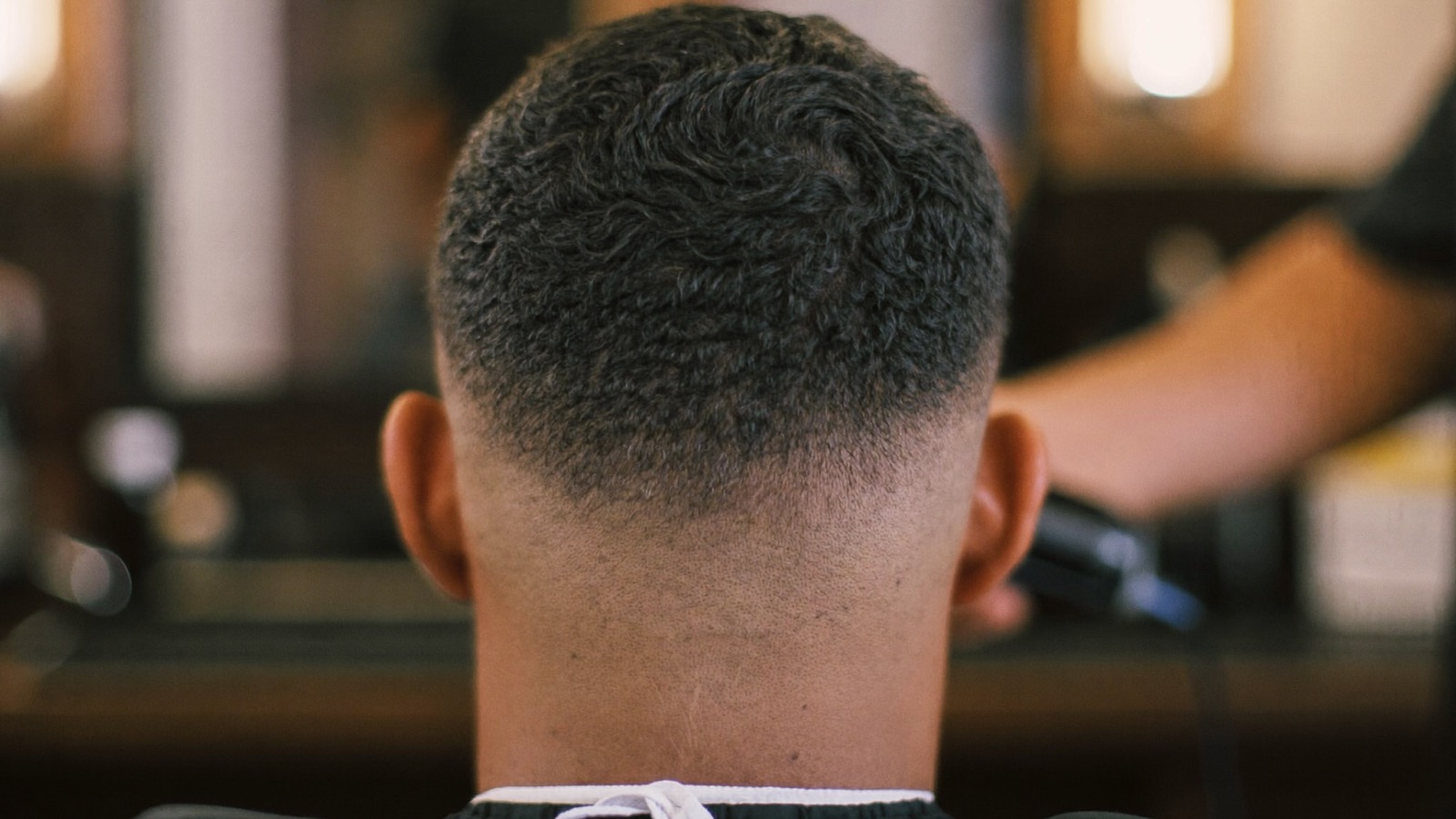
Every hair transplant scar comes from the donor area, and its shape depends on the technique. FUE leaves many tiny, scattered dots where single follicular units were removed; FUT leaves one fine line across the back of the head where a strip of scalp was taken and closed. Both are permanent, and both are usually hidden once the surrounding hair has grown a few centimeters. If you are weighing strip surgery, our page on FUT hair transplant on Long Island covers the procedure itself; this guide focuses only on the scar.
Below you will find what each scar looks like once healed, the shortest haircut that usually keeps it out of sight, what a surgical team does to keep scars fine, and the options that exist if an older scar has become visible. The full decision between the two methods is covered separately in FUE vs. FUT.
Quick answer: FUE leaves tiny scattered dots; FUT leaves a fine line at the back. Both are usually hidden by a few centimeters of hair. FUE tends to tolerate shorter clipper cuts, while a FUT line is more likely to show with a very close fade or a shaved head.
Why Every Transplant Leaves a Scar
Any hair transplant leaves a scar because follicles have to be removed from the skin, and skin heals with scar tissue wherever it is cut. The recipient area, where grafts are placed, heals almost invisibly because the openings are tiny and new hair grows through them. The donor area is where the visible scarring, if any, sits. That is why the question to ask is not whether there will be a scar, but what kind, where and how easy it is to hide.
What an FUE Donor Area Looks Like Healed
A healed FUE donor area shows small, pale, round dots spread through the hair at the back and sides of the head. Each dot is usually under a millimeter across. Because the dots are scattered among hair that was left in place, most people cannot see them at an everyday length.
The pattern matters more than any single dot. When extraction is spread evenly over a wide zone, density drops a little everywhere and the area still looks full. When too many grafts come from one region, the dots cluster and the area can look thin or patchy with short hair. Our guide to your hair transplant donor area explains how the safe zone is mapped and why a reserve is kept for later.
What a FUT Scar Looks Like Healed
A healed FUT scar is a single horizontal line, usually running roughly from ear to ear across the back of the head. In many people it settles to a pale line a millimeter or two wide, though width varies with skin type, scalp tension and how much tissue was removed. Hair above and below the line lies over it, so it is covered by hair of moderate length.
Over the first year, a FUT scar typically fades from pink to skin tone and flattens. In a small number of people the line stretches and widens, particularly with a tight scalp or a large strip. Raised or thickened scars are uncommon but possible, especially in people with a personal or family history of keloids.
Scar Type vs. the Shortest Haircut That Hides It
The shortest haircut that hides a scar depends on its type, your hair color and your skin tone. The table below gives typical ranges for a well-healed donor area.
| Scar type | Usually hidden at | Likely to show at |
| FUE dots, evenly spread | About 3 mm (a No. 1 guard) or longer | Skin fade or razor shave |
| FUE dots, over-harvested patch | About 10 mm (a No. 3 guard) or longer | Anything shorter than a No. 3 |
| FUT line, fine | About 10 to 12 mm (a No. 3 to No. 4 guard) | No. 2 and shorter |
| FUT line, widened | About 15 mm or longer, scissor cut | Most clipper lengths |
Contrast plays a big role. Dark hair over fair skin makes pale scars stand out more; light or gray hair, or a darker skin tone, makes them harder to see. If you like a very short fade, say so at your consultation, because it can change which technique is recommended.
How Scars Are Kept Fine
Most of what keeps a scar discreet happens during planning and surgery rather than during healing. For FUE, the team spreads extraction evenly across the safe zone, uses an appropriately small punch for your follicles and avoids taking grafts from areas likely to thin later. For FUT, the width of the strip is matched to how flexible your scalp is, so the edges can close without excess tension.
FUT closures often use a trichophytic technique, in which one edge of the wound is trimmed so that hair can grow up through the scar line once it heals. This tends to make the line harder to see. Stitches or staples are removed at around 10 to 14 days, and careful aftercare in that period helps the line heal flat.
At our Melville clinic, Dr. Val Prokurat, MD reviews and directs every plan, and the in-house team carries out extraction and placement. Choosing between FUE and FUT always includes a discussion of how you like to wear your hair, because that is where scar visibility really matters.
What About the Recipient Area?
The recipient area, where grafts are placed along the hairline or crown, rarely leaves a visible scar. Each graft sits in a tiny opening made with a fine blade or needle, and these close within days. Mild redness or small bumps can appear for a few weeks, and occasional pimple-like spots show up as new hairs push through around months two to four, but they settle on their own. Once hair has grown in, the recipient area looks like normal skin under normal hair.
The exception is an older procedure done with large plugs, which could leave small, visible marks or a cobblestone texture in the front. Those cases are assessed differently, and softening them usually involves adding fine single-hair grafts around and between the older ones.
Healing Habits That Help
A few habits in the first weeks support a neater scar. Follow your washing instructions closely, avoid picking at scabs, keep the donor area out of strong sun until any pinkness fades and hold off on heavy lifting and neck strain after FUT, since tension on a fresh closure can widen it. Smoking slows wound healing, so a break from it before and after surgery helps both the donor area and the new grafts. Our guide to what not to do after a hair transplant covers the full list.
Improving an Old Scar
An older scar that has become visible can often be improved, though rarely erased. The main options are:
- FUE into the scar: follicles taken with FUE can be placed into a FUT line or into a patch of clustered dots. Scar tissue has a weaker blood supply, so growth can be lower than in normal skin, and some people need two rounds.
- Scalp micropigmentation: tiny pigment deposits are tattooed into the scar so it blends with the stubble pattern around it. This suits people who prefer to keep their hair short.
- Scar revision surgery: in selected cases, a widened FUT scar can be cut out and closed again with a finer technique. This depends on scalp flexibility and is not suitable for everyone.
- A change of haircut: sometimes simply wearing the back a guard length longer is enough.
Which option makes sense depends on the scar, the remaining donor supply and how you want to wear your hair. Scar improvement is one part of our hair transplant repair on Long Island, and our article on hair transplant revision explains how older results are assessed.
Find Out What Your Donor Area Will Look Like
Come in for a free consultation at 445 Broadhollow Rd, Melville, NY 11747. Tell us how short you wear your hair, and we will explain which technique leaves the least visible donor area for you. Phone (516) 202-7223, weekdays from 9am to 6pm.