
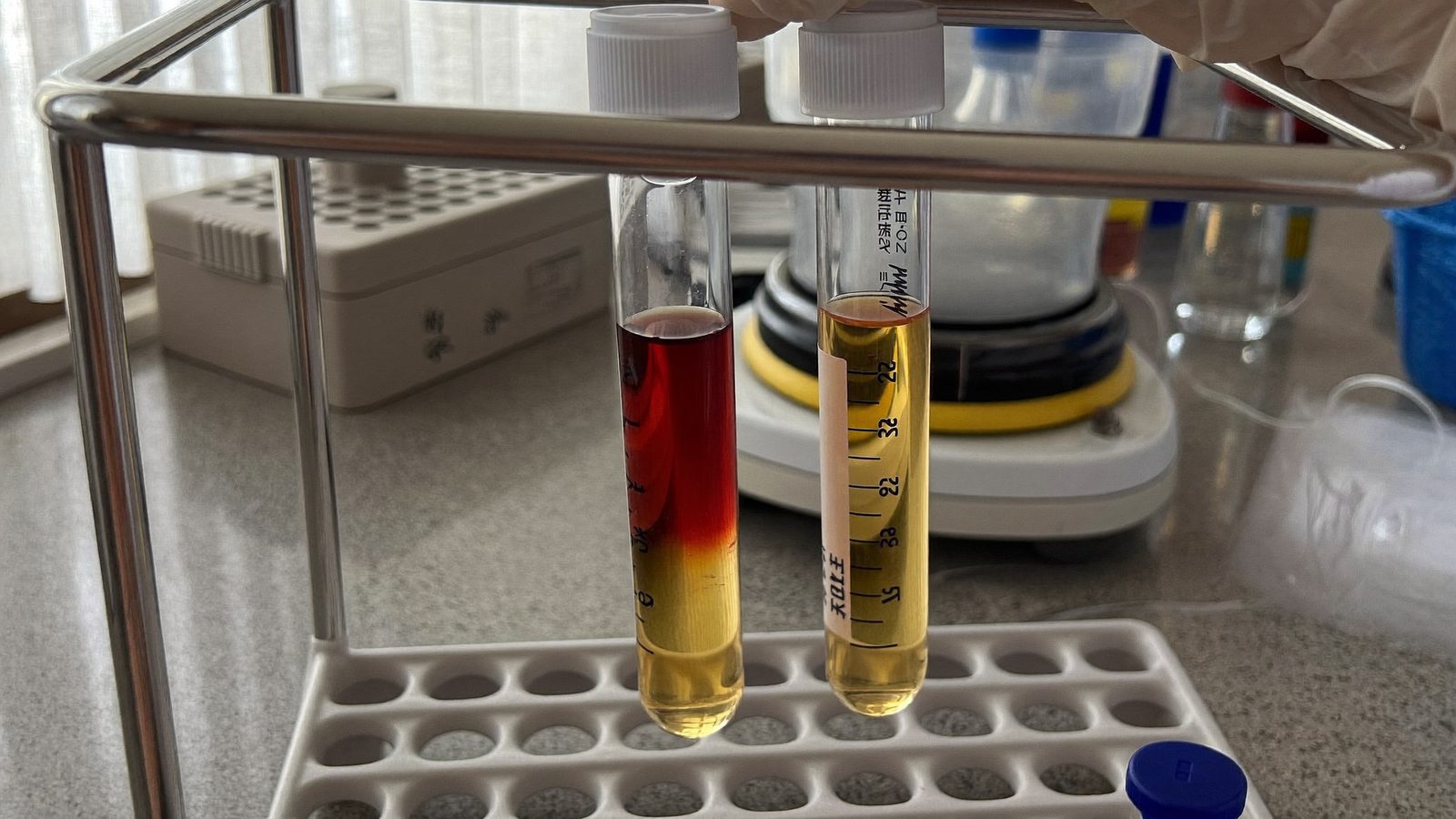
PRF, short for platelet-rich fibrin, is a concentrate made from a small sample of your own blood that some clinicians inject into the scalp to support thinning hair. It is a close relative of PRP (platelet-rich plasma), and the two are often confused. The short version: PRF is spun more gently, contains no anticoagulant, and forms a soft fibrin matrix after it is drawn, while PRP is spun harder and stays liquid. Whether that difference matters for your hair is a fair question, and the honest answer is that both treatments share the same basic limits.
In consultations at our Melville clinic, patients from Nassau and Suffolk counties often arrive having read about PRF online and want to know whether it is "the newer, better PRP." This guide explains what PRF is in plain language, how it is prepared compared with PRP, who might be a reasonable candidate, what a session involves, how long any change takes to show, and how to decide between an injection program and a hair transplant. Throughout, we keep the claims cautious, because the evidence for both treatments is still developing and results vary widely from person to person.
PRF in Plain Language
Your blood carries platelets, small cell fragments best known for helping wounds close. Platelets also store signaling proteins, often called growth factors, that take part in tissue repair. The idea behind both PRP and PRF is simple: collect your blood, concentrate the platelet-rich portion, and place it where you want those signals to act. For hair, that means the parts of the scalp where follicles are shrinking but still alive.
The "fibrin" in PRF refers to the protein mesh your body builds when blood clots. Because PRF is prepared without an anticoagulant, the concentrate begins to form this mesh shortly after it is drawn. Supporters of PRF suggest that the fibrin network may hold platelets and white blood cells together and release their contents more gradually than liquid PRP. That is a reasonable hypothesis, but it is still being studied, and no one can promise that a slower release translates into more hair for any given patient.
A few things are true of PRF no matter who prepares it:
- It is made from your own blood, so there is no donor material and a very low risk of allergic reaction to the concentrate itself.
- It is non-surgical. There are no incisions, no grafts and no stitches.
- It can be used alone or alongside a hair transplant as part of a broader plan.
- It works only where follicles are still alive. It cannot regrow hair on a scalp that has been smooth and shiny for years.
Key point: PRF and PRP are supportive treatments for thinning hair, not replacements for lost follicles. If an area has no living follicles left, the realistic options are a transplant or leaving it as it is.
How PRF Is Prepared Compared With PRP
The two treatments start the same way, with a routine blood draw from the arm. The differences come in the tube and the centrifuge. PRP tubes usually contain an anticoagulant so the blood stays liquid, and the sample is spun at a higher force, sometimes in two stages, to separate a concentrated plasma layer. PRF tubes contain no anticoagulant, and the sample is spun at a lower speed for a shorter time. The goal with PRF is to collect the upper fraction before the fibrin network fully sets, so it can still be drawn into a syringe and injected.
The table below summarizes the practical differences most patients ask about.
| Feature | PRP (platelet-rich plasma) | PRF (platelet-rich fibrin) |
| Source | Your own blood | Your own blood |
| Anticoagulant in tube | Usually yes | No |
| Centrifuge speed | Higher, sometimes two spins | Lower, single shorter spin |
| Consistency after prep | Liquid | Liquid at first, then thickens as fibrin forms |
| Cell content | Concentrated platelets, fewer white cells in many protocols | Platelets plus more white cells and fibrin, depending on protocol |
| Working time | Relatively flexible | Short, must be injected promptly |
| Evidence base for hair | Larger and longer-standing, still mixed | Smaller and newer, still developing |
| Works on fully bald areas | No | No |
Protocols vary between clinics, centrifuge brands and tube types, so you will see different speeds, times and terms online. Some providers also use names such as "injectable PRF" or "i-PRF." The labels matter less than the questions behind them: what is in the syringe, how it was prepared, and whether the person treating you has a clear plan for measuring whether it is working.
Is slower release actually better?
This is the claim most often made for PRF, and it deserves a careful answer. Laboratory work suggests fibrin matrices can release growth factors over a longer period than liquid plasma. What remains less clear is how much that matters inside a living scalp, where both treatments are absorbed and broken down by the body. Comparative studies on hair are limited in size and design, and they do not yet show a consistent, meaningful advantage of one over the other. For that reason, we describe PRF to patients as an interesting variation on PRP, not as an upgrade.
Who Is a Reasonable Candidate
Platelet-based treatments tend to make the most sense for people with early or moderate thinning, where the hair is getting finer and the scalp is showing through, but the follicles are still producing hair. In our Long Island consultations, the patients who are most often good fits for an injection program share a few traits:
- Diffuse thinning rather than smooth bald patches. Miniaturized hairs can sometimes be supported; empty skin cannot.
- Recent change. Thinning that started in the last few years usually has more living follicles than thinning that has been stable for a decade.
- Realistic goals. The aim is usually to slow loss, thicken existing hair, or hold ground, not to rebuild a hairline.
- Willingness to commit to a series. One session is rarely enough to judge anything.
- Women with pattern thinning. Female pattern hair loss is often diffuse, which is the type of thinning these treatments are aimed at. Our female hair transplant plans include complimentary PRP for this reason.
There are also people for whom PRF or PRP is not a good idea, or at least needs a physician's review first. That includes anyone with a platelet or clotting disorder, people taking blood thinners, those with active scalp infection or certain skin conditions, people undergoing cancer treatment, and anyone with an untreated cause of shedding such as a thyroid problem, iron deficiency or a recent major illness. Sudden patchy loss can point to alopecia areata or another condition that needs a medical diagnosis rather than an injection. If you are unsure which applies to you, that is exactly what an assessment is for.
What about men with a receding hairline?
Men with male pattern hair loss can also try platelet-based treatment, especially in the crown and mid-scalp where thinning is often diffuse. The temples tend to be harder, because once that area has receded the follicles there are frequently gone. Many men combine injections with medication to protect existing hair, then consider surgery later if the hairline itself is the main concern. Our guide on planning a men's hair transplant by stage of hair loss walks through how those decisions change from the first signs of recession to more advanced patterns.
What a Session Involves
Whether a clinic uses PRF or PRP, a session follows a similar sequence. Here is what to expect, step by step:
- Review and photos. The team confirms your health history, checks any new medications, and takes standardized photos of the treatment areas so later sessions can be compared fairly.
- Blood draw. A small amount of blood is drawn from the arm, similar to a routine lab test.
- Centrifuge. The tubes are spun to separate the platelet-rich portion. For PRF this step is shorter and gentler, and timing matters because the fibrin begins to form.
- Scalp preparation. The scalp is cleaned, and comfort measures such as a cooling device or local numbing may be used.
- Injections. The concentrate is placed in a grid pattern across the thinning areas using fine needles. Most patients describe pressure and brief stinging rather than real pain.
- Aftercare. You can usually return to normal activities the same day. Most clinics suggest avoiding hair washing, heavy exercise and harsh products for a short period.
The whole visit usually takes around an hour. Side effects tend to be minor and short-lived: tenderness, mild swelling, a headache, small bruises or pinpoint bleeding at injection sites. Infection is uncommon when sterile technique is used. Because the concentrate comes from your own blood, serious reactions are rare, but you should still tell the team about any medications, supplements or conditions that affect bleeding.
How many sessions, and how often?
There is no single agreed schedule. A common pattern for platelet-based hair treatment is an initial series of three or four sessions spaced about a month apart, then maintenance sessions every few months if the response is worthwhile. Some providers space PRF sessions differently on the theory that release is slower, but that is a judgment call rather than a settled standard. What matters most is that the schedule is planned in advance, that photos are taken at consistent angles and lighting, and that you and your physician agree on a point at which you will judge whether it is worth continuing.
How Long Before Any Change Shows
Hair grows slowly, and treatments that act on the growth cycle need time. Patients who expect visible change in a few weeks are almost always disappointed. A more realistic timeline looks like this:
- First 4 to 8 weeks: usually nothing visible. Some people notice less shedding in the shower or on the pillow, but this is subjective.
- Around 3 to 4 months: if the treatment is helping, existing hairs may start to look slightly thicker, and the part line or crown may look a little less see-through in photos.
- Around 6 months: a fair point to compare standardized photos and decide, with your physician, whether the response justifies maintenance.
- Beyond a year: any benefit tends to fade without maintenance, because the underlying cause of pattern hair loss is still active.
Some patients see a clear improvement. Some see modest stabilization, which can still be valuable if the alternative was ongoing loss. And some see no meaningful change. We tell patients plainly that there is no way to know in advance which group they will be in, which is why we prefer to plan a defined trial rather than an open-ended series.
Key point: Judge any platelet-based treatment by comparing standardized photos taken months apart, not by how your hair looks in the mirror on a given day. Lighting, styling and wetness change how thinning looks far more than you might expect.
Combining Injections With Medication and Surgery
PRF and PRP rarely work best on their own. For pattern hair loss, the treatments with the most established track record are the FDA-approved medications: topical minoxidil and, for men, oral finasteride. Finasteride is a prescription medication with possible side effects that you should discuss with a physician. Oral minoxidil is sometimes used off-label under a physician's supervision. Many patients pair injections with one of these medications so that each approach addresses a different part of the problem.
Platelet-based treatments are also used around hair transplant surgery. A transplant moves healthy follicles from the back and sides of the scalp, which are usually resistant to pattern loss, into thinning or bald areas. It adds hair where none is growing. What it does not do is stop the native hair around the grafts from continuing to thin. That is why we talk with transplant patients about protecting their existing hair after surgery, and why platelet treatment is sometimes part of that conversation. If you are curious about how grafts are handled during surgery, our page on the Nova Medical FUE Protocol covers chilled graft storage, spacing and physician review of each plan.
A note on newer and experimental options
Patients sometimes ask whether they should wait for something better before doing anything. It is a reasonable question, but waiting has a cost, because follicles that miniaturize fully cannot be revived by injections or medication. Our overview of where hair cloning research actually stands explains why lab-grown follicles are not yet a clinical option, and why protecting the hair you have now usually makes more sense than waiting for a breakthrough.
PRF, PRP or a Transplant: How to Decide
The choice usually comes down to what is happening on your scalp right now. Here is a simple way to think about it:
- Early, diffuse thinning with living follicles: a platelet-based treatment, often combined with medication, is a reasonable first step. Whether that is PRF or PRP matters less than consistency and honest tracking.
- A receded hairline or areas with very little hair left: injections are unlikely to restore density there. A transplant using manual FUE with motorized handheld tools, FUT or DHI is the option that can add follicles.
- A mix of both: this is common. A transplant can rebuild the area that is gone, while medication and possibly platelet treatment help protect the surrounding native hair.
- Unclear diagnosis or sudden shedding: start with a medical evaluation. Treating the wrong cause wastes time and money.
If you are leaning toward surgery, it helps to understand how much donor hair you have to work with. Most people have a lifetime donor supply of roughly 5,000 to 7,000 grafts depending on density, which is why our team plans conservatively and thinks about where your hair loss may go over the next decade, not just the next year. Transplant pricing on Long Island is per graft, from $3.99 to $7.99, with most procedures totaling $4,000 to $15,000, no session fees, and 0% interest financing for the first 12 months. You receive a written quote after a free assessment. The full breakdown is on our hair transplant cost page.
A word on expectations, too. Some people come to PRF after seeing dramatically full hairlines on public figures and assume injections are behind them. In reality, those looks usually involve a mix of genetics, styling, lighting and, in some cases, surgery. Our piece on what is realistic about celebrity hairlines is a useful reality check before you set your goals.
Questions to Ask Any Provider Before Starting
Because protocols for both PRF and PRP vary so much, it is worth asking a few direct questions before you commit to a series anywhere. A thoughtful provider should be comfortable answering each of them:
- What exactly is being prepared, and with what tubes and centrifuge settings?
- How many sessions are planned, how far apart, and what does the full series cost?
- Who reviews my case, and how will we decide whether to continue?
- Will you take standardized photos at the start and at each checkpoint?
- What medications or conditions would make this a poor choice for me?
- If my thinning progresses, what would you recommend next?
Be cautious of any provider who promises a specific amount of regrowth, pushes a large prepaid package before seeing how you respond, or dismisses medication and surgery outright. Platelet-based treatment can be a useful tool, but it is one tool among several.
Getting an Assessment on Long Island
Our clinic is at 445 Broadhollow Rd on Route 110 in Melville, a short drive from the Long Island Expressway and the Northern State Parkway, which makes it a practical stop for patients across Nassau and Suffolk counties. We are open Monday to Friday, 9am to 6pm, and you can reach the team at (516) 202-7223.
At a free assessment, we look closely at your scalp, check for miniaturization, review your history and medications, and talk through what you want to achieve. Every treatment plan is reviewed by Dr. Val Prokurat, MD. If a platelet-based program makes sense, we will explain how our PRP treatment for thinning hair is structured, including session spacing and how we track progress. If PRF specifically is what you are interested in, ask about it at your assessment and we will give you a straight answer about how it compares for your situation. And if a transplant is the better route, we will tell you that too, along with a written quote.
The most useful thing you can do now is get an accurate picture of what is happening on your scalp. Once you know how many living follicles you are working with, the choice between PRF, PRP, medication and surgery becomes much clearer.
Medically reviewed by Dr. Val Prokurat, MD. Dr. Prokurat is a physician with advanced training in minimally invasive techniques who reviews and oversees every treatment plan at Nova Medical Hair Transplant Long Island, 445 Broadhollow Rd in Melville. This article is for general education and is not a substitute for an in-person medical assessment. Individual results vary. Read more about Dr. Prokurat.
Find Out What Your Scalp Needs
A free assessment in Melville shows how many living follicles you have to work with, so you can choose between platelet treatment, medication and surgery with confidence.