
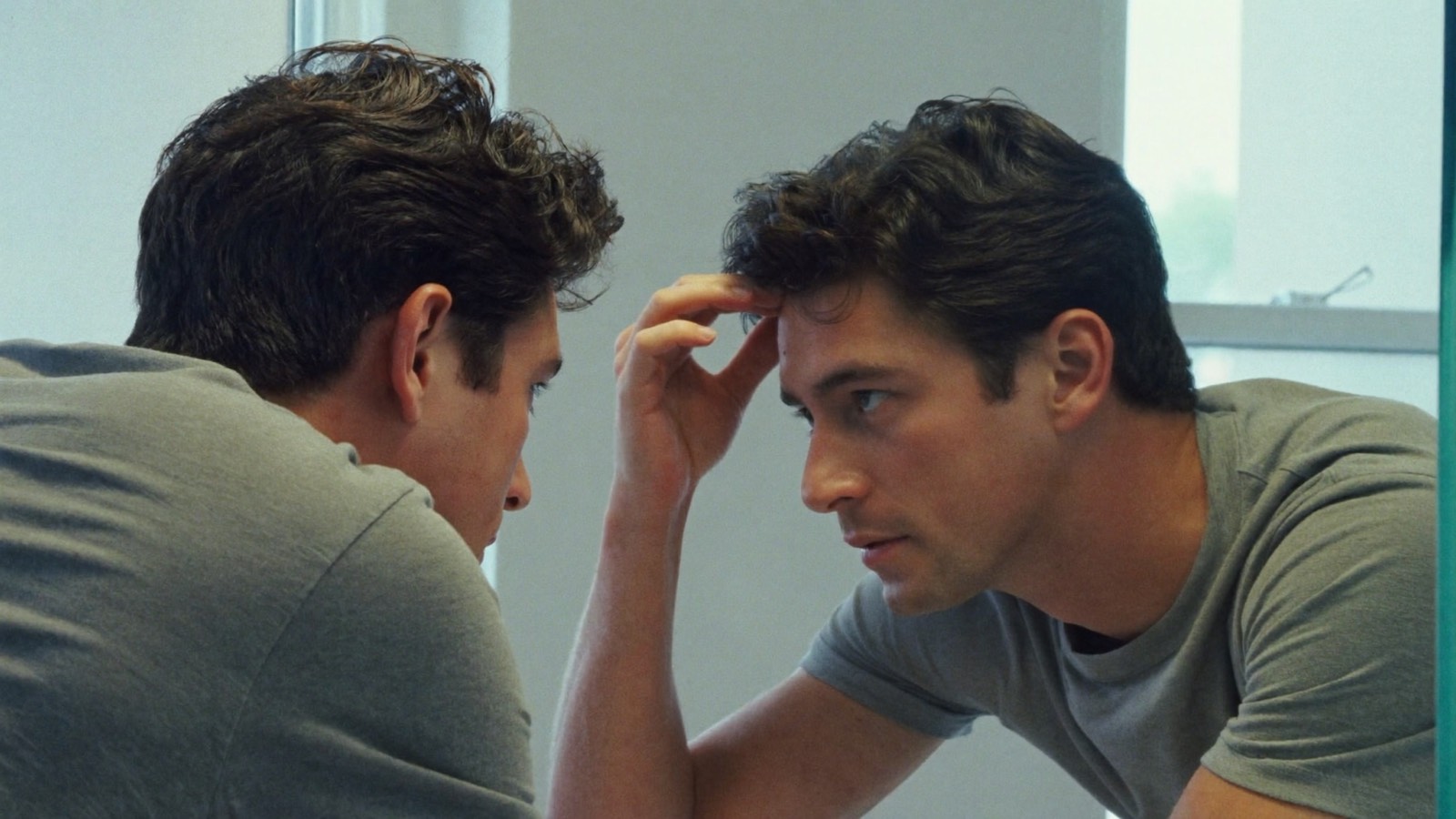
Why hair transplants fail usually comes down to planning and handling, not to the method itself. FUE, FUT and DHI can all give natural, lasting results, but grafts that are taken too aggressively, kept out of the body too long or placed into a poor design will look thin or obvious whatever the technique. Patients play a part too, mostly in the first two weeks. If an earlier procedure has left you unhappy, our hair transplant repair on Long Island page explains how corrective work is approached.
This guide focuses on root causes and prevention. It splits the common mistakes into what clinics get wrong and what patients get wrong, then looks at the one thing that most often makes a normal result look like a failure: judging it too early.
Quick answer: most poor hair transplant results trace back to a short list of avoidable problems. On the clinic side these are overharvesting the donor area, a hairline or density plan that does not suit the patient, and grafts that dry out or are handled roughly. On the patient side they are disturbing grafts in the first days, skipping aftercare and judging the result before 12 months.
Clinic-Side Mistakes
Clinic-side mistakes are the larger share of serious problems, because they happen during the procedure, where you cannot see the details. They tend to fall into three groups: how the donor area is used, how the result is designed and how the grafts are handled between extraction and placement.
Overharvesting the donor area
Overharvesting means taking too many grafts from one part of the donor area, or taking them too close together. The back of the head then looks patchy or see-through, and the supply that might be needed for future sessions is used up. Because donor hair does not grow back once it is removed, this is one of the hardest mistakes to undo. Our guide to the donor area explains why the supply is finite and how safe extraction is spread out.
A design that does not fit
A poor design can make even healthy, growing grafts look wrong. Common examples are a hairline set too low or too straight for your age, a sharp edge with no soft transition, or grafts spread so thinly over a large area that nothing looks full. Hair direction matters too: grafts that point straight up or forward catch the light in a way natural hair does not. A design should be planned for how your hair will look in 10 or 20 years, not only next year, and our article on a natural looking hair transplant covers what that planning involves.
Graft dehydration and rough handling
Grafts are living tissue. Once removed, they need to be kept moist and cool, handled gently and placed without long delays. Grafts that dry out, are squeezed or crushed with forceps, or sit outside the body for too long may not survive. This is invisible on the day, and only shows months later as patchy or weak growth. Very long procedures with too few trained staff raise this risk, which is why team size, session length and storage solutions are worth asking about.
Recipient sites made too deep or too dense
The small openings where grafts are placed need the right depth, angle and spacing. Sites that are too deep can cause pitting or bumps, sites that are too shallow can let grafts pop out, and sites packed too tightly in one session can reduce blood supply to the area. Our Nova Medical FUE protocol page sets out how extraction, storage and placement are handled at our Melville clinic, where the in-house team carries out the work under the direction of Dr. Val Prokurat, MD.
Patient-Side Mistakes
Patient-side mistakes are usually smaller in effect but common, and nearly all of them happen in the first two weeks while grafts are still anchoring. A few take place before surgery, when expectations are set.
- Picking or scratching scabs: small crusts form around each graft. Picking them early can pull a graft out with them.
- Pressure and friction: tight hats, rubbing the head with a towel or sleeping face-down can dislodge grafts in the first days.
- Skipping aftercare: not washing as instructed, or washing too roughly, can lead to heavy crusting or irritation.
- Returning to hard exercise too soon: heavy sweating and strain can raise swelling and disturb healing.
- Smoking and alcohol around surgery: both can affect blood flow and healing; your instructions will say how long to avoid them.
- Stopping medical treatment: if a physician has recommended treatment to protect native hair, stopping it can let surrounding hair thin, which makes the transplant look weaker over time.
Our guide to what not to do after a hair transplant goes through the first weeks day by day.
The other patient-side mistake happens before surgery: expecting one session to recreate the density of a teenager. A plan that matches your donor supply and your stage on the Norwood or Ludwig scale gives a more natural result than one that chases maximum coverage.
Problem vs. Cause vs. Prevention
The same visible problem can have different causes. This table matches common complaints with their usual causes and how each is prevented.
| Problem you notice | Common cause | How it is prevented |
| Thin or patchy growth after 12 months | Grafts dried out, crushed or kept out too long | Trained team, cool storage solution, steady session pace |
| See-through or patchy back of the head | Overharvesting the donor area | Spread extraction evenly and respect a safe graft limit |
| Hairline looks too low, straight or sharp | Design not matched to age and face | Age-appropriate design with a soft, irregular edge |
| Hairs point the wrong way or stick up | Wrong placement angle or direction | Map native hair direction before placing grafts |
| Bumps, pitting or ridges | Recipient sites too deep or too dense | Correct site depth, angle and spacing |
| Gaps where grafts were placed | Grafts dislodged in the first days | No picking, no pressure, follow washing instructions |
| Transplant looks weaker after a few years | Native hair around it kept thinning | Plan for future loss and discuss medical treatment |
Many of these problems can be screened for before you book. Our article on hair transplant red flags lists the warning signs to look for in a clinic during the first contact and the consultation.
Is It Failure or Just Early? Timing Matters
A result can only be judged fairly at around 12 months, and the crown can take up to 18. Before that, what looks like failure is often normal healing. Most transplanted hairs shed within the first two to six weeks, the scalp can look much as it did before surgery for two or three months, and early regrowth is often fine and uneven.
A typical pattern looks like this:
- Weeks 2 to 6: transplanted hairs shed. The follicles stay in place.
- Months 2 to 3: the "ugly duckling" phase, when little seems to be happening.
- Months 3 to 5: new hairs begin to appear, often thin at first.
- Months 6 to 9: visible improvement as hairs thicken.
- Months 12 to 18: close to the final result.
Our guide to shedding after a hair transplant explains why that early loss happens. Taking photos in the same light and at the same angle every month or two is the most reliable way to track change, since it is hard to judge slow growth in a mirror.
What to Do if Your Result Disappoints
If you are past 12 months and still unhappy, the first step is a calm, detailed assessment rather than another procedure straight away. Start with the clinic that did the work and ask for a review with photos from before surgery and from each stage since. Then consider a second opinion from a clinic that offers repair work.
A useful assessment checks how much donor hair is left, whether the problem is low growth, poor design or both, and whether native hair loss is still active. That tells you what is realistic. Some issues, such as low density, can often be improved with more grafts. Others, such as a hairline set too low or grafts at the wrong angle, may need a different plan. For what tends to drive good outcomes in the first place, see our guide to hair transplant success rates.
Corrective work is priced per graft at our clinic, at $3.99 to $7.99, with most cases between $4,000 and $15,000, no session fees and 0% financing for the first 12 months. Your written plan after consultation sets out the graft count and the cost before you decide.
Get a Clear Answer About Your Hair
Book a free consultation at Nova Medical Hair Transplant Long Island, 445 Broadhollow Rd, Melville, NY 11747. Whether you are planning a first procedure or unhappy with an earlier one, we check your donor area and explain your options in writing. Call (516) 202-7223, Monday to Friday, 9am to 6pm.